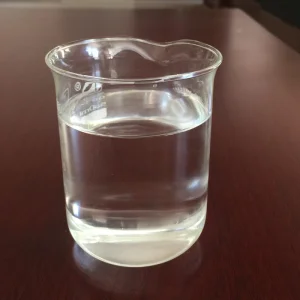
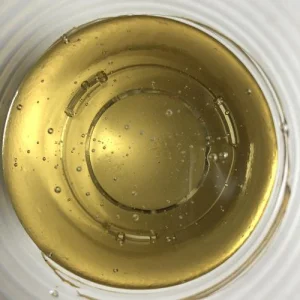
Verified commercial and technical grades supplied globally with batch-specific Certificate of Analysis (COA) and strict GHS-compliant documentation.
Moving beyond conventional high-molecular-weight solid rubbers, low-viscosity reactive liquid SBR provides dynamic compounding capabilities across elastomeric and adhesive matrices.
Synthesized using alkyllithium initiators in non-polar hydrocarbon solvents. This continuous or precise batch anionic approach ensures an exceptionally narrow molecular weight distribution (Mw/Mn < 1.25), preventing batch-to-batch rheological variation in client automated dispensing systems.
By tuning microstructure modifiers during butadiene insertion, 1,2-vinyl content can be dialed between 10% and 75%, shifting Glass Transition Temperatures (Tg) from -70°C to -15°C. This allows engineers to systematically optimize wet-skid resistance vs rolling resistance in ultra-high-performance tire compounds.
End-chain functionalization (e.g., hydroxyl-terminated HTBS, ethoxy-silane, and carboxylate chemistry) forms a permanent covalent bridge between organic polymer backbones and inorganic fillers (precipitated silica or carbon black), minimizing hysteresis energy dissipation.
Physical, rheological, and analytical baselines across standardized commercial grades produced at our Liaoning and Shandong synthesis hubs.
| Analytical Parameter | Test Standard Method | Grade LSBR-15 (Standard) | Grade LSBR-30 (High-Vinyl) | Grade HTBS-20 (Hydroxyl) |
|---|---|---|---|---|
| Bound Styrene Content (%) | ASTM D5775 / FTIR | 15.0 ± 1.5 | 30.0 ± 1.5 | 20.0 ± 1.5 |
| Vinyl 1,2-Butadiene (%) | FTIR / 1H-NMR | 12.0 – 18.0 | 60.0 – 72.0 | 18.0 – 24.0 |
| Number-Average Molecular Wt (Mn) | GPC (THF, Polystyrene Std) | 5,000 – 7,500 | 8,000 – 11,000 | 3,500 – 5,500 |
| Brookfield Viscosity (mPa·s @ 25°C) | ASTM D2196 | 25,000 – 45,000 | 65,000 – 95,000 | 18,000 – 32,000 |
| Glass Transition Temp (Tg, °C) | DSC (10°C/min) | -68 ± 2 | -22 ± 2 | -58 ± 2 |
| Volatile Matter (wt%) | ASTM D5668 | ≤ 0.50 | ≤ 0.40 | ≤ 0.45 |
| Ash Content (wt%) | ASTM D5667 | ≤ 0.15 | ≤ 0.10 | ≤ 0.12 |
How low-molecular-weight reactive elastomers eliminate processing bottlenecks and expand the performance envelopes of global finished goods.
Electric vehicles impose up to 30% higher instantaneous torque and extra battery curb-weight on tire treads. Utilizing liquid SBR as a fully co-curable reactive plasticizer prevents the low-temperature embrittlement and environmental leaching typical of conventional aromatic processing oils, securing the elusive balance of low rolling resistance (A-grade EU labeling) and extreme wet-grip braking safety.
Hydroxyl-terminated butadiene-styrene copolymers (HTBS) function as non-polar hydrophobic soft segments in bespoke polyurethane cast systems. They offer low moisture absorption, resistance to mineral acids, hydrolytic resilience, and electrical breakdown isolation required for critical subsea umbilical cables, encapsulants, and transformer potting compounds.
With global VOC directives tightening across North America and the EU, our liquid SBR grades serve as direct reactive diluents in solvent-less HMPSA (Hot Melt Pressure Sensitive Adhesives). Formulators achieve sub-10,000 cPs melt processing viscosities without plasticizer migration, enabling peel-strength retention across automotive interior trims and exterior electronics sealing.
Synthesizing next-generation macro-monomers aligned with global net-zero trajectories and circular economy metrics.
Adopting bio-ethanol-derived 1,3-butadiene feedstocks via ISCC PLUS mass-balance certification, slashing upstream Scope 3 embedded carbon emissions by up to 42% per metric ton of synthesized liquid polymer.
Transitioning from pure linear di-block systems to multi-arm star architecture liquid SBR via divinylbenzene (DVB) core-coupling, yielding higher polymer elasticity with lower intrinsic bulk viscosity.
Commercializing bis-alkoxysilyl functionalized chains designed for ultra-rapid condensations with high-surface-area silica, dropping mixing energy cycles in industrial Banbury units by up to 20%.
Engineering reactive thermal-cleavage sites into the central polymer sequence to allow targeted degradation and circular recovery of unvulcanized specialty elastomers from end-of-life tire buffings.
Scaling capacity through automated continuous polymer synthesis, domestic chemical feedstock integration, and ISO-controlled quality governance.
Our plants are situated within provincial petrochemical mega-clusters with pipeline access to purified styrene and butadiene monomers. By insulating operations from intermediate transport costs, we protect global partners from supply disruptions.
Every lot undergoes inline Fourier-Transform Infrared Spectroscopy (FTIR) and Gel Permeation Chromatography (GPC). Viscosity, volatile traces, and residual catalyst salts are quantified against certified target bounds prior to tank isolation.
Located near Qingdao and Tianjin international maritime hubs, with dedicated temperature-monitored isotank handling, dangerous goods declaration workflows, and real-time shipment GPS and pressure monitoring.
Understanding cost baselines, raw monomer price-indexing, and container logistics for Tier-1 compounding facilities.
Liquid SBR pricing is driven by upstream ICIS Asian Butadiene and Styrene monomer indices, combined with chemical processing adders (polymerization energy, specialized lithium catalyst packages, and nitrogen blanketing). We provide transparent pricing models—from fixed annual contracts to formula-indexed quarterly pricing structures (FOB China Port, CIF Destination, or DDP delivered terms).
Supplied in 190 kg internal-coated steel drums (purged with high-purity dry nitrogen), 950 kg composite IBC containers, or 20,000–24,000 kg heated ISO Tank containers. Specialized heating pad integrations are available for winter shipments to ensure low unloading viscosity at your storage terminals.
Every commercial consignment is supported by comprehensive documentation: GHS SDS (16 sections, multi-language), Certificate of Analysis (COA), Non-Dangerous Goods Declaration (or UN DG transport docs where applicable), REACH Lead Registrations / OR agreements for the EU, and US TSCA compliance statements.
Key technical, commercial, and operational insights for evaluation and qualification teams.
Solid SBR typically features molecular weights (Mn) exceeding 250,000 to 500,000 g/mol, requiring heavy mechanical mastication and extensive aromatic or paraffinic processing oils to process. In contrast, Liquid SBR (Mn between 3,000 and 15,000 g/mol) acts as a co-vulcanizable, reactive polymeric plasticizer. It permanently links into the crosslinked elastomeric matrix during sulfur or peroxide cure without subsequent volatile exudation or migration.
Yes. Via living anionic solution polymerization, our production team controls the microstructure modifiers. We can configure styrene fractions between 10% and 45% and adjust 1,2-vinyl additions between 10% and 75% for custom batch runs meeting a Minimum Order Quantity (MOQ) of 3 to 5 Metric Tons.
Liquid SBR contains residual unsaturation and should be stored under an inert dry nitrogen blanket at temperatures below 30°C (86°F), away from direct sunlight, open flames, and strong organic peroxides. Under sealed container conditions, our factory-stabilized products maintain full spec compliance for 12 months from manufacture.
We provide 500g to 2kg evaluation samples packed in nitrogen-flushed, sealed aluminum flasks accompanied by full batch-matching COA and GHS SDS documentation. Courier transport is organized via our dedicated international logistics channels directly to your testing facilities.
Explore our parallel product streams spanning inorganic specialty salts, high-density metal powders, and ultra-high-purity process gases.