Specialty Polyether - Low Molecular Weight PET Polyether
Explore Product


Engineered specifications verified by batch Certificate of Analysis (COA), tailored molecular weights, and tight polydispersity indices for industrial synthesis.


Analyzing worldwide supply networks, consumption shifts, and the critical transition from standard linear polyols to high-purity mono-disperse derivatives.
Polyethylene Glycol (CAS No. 25322-68-3), commonly known across commercial sectors as PEG, Macrogol, or Polyoxyethylene (POE), represents one of the most versatile non-ionic, hydrophilic polyether oligomers and polymers in the global chemical landscape. Synthesized through the catalytic ring-opening polymerization of Ethylene Oxide (EO) with water, monoethylene glycol, or diethylene glycol initiators, the chemical architecture H-(OCH₂CH₂)ₙ-OH exhibits a tunable spectrum of physicochemical properties determined directly by its weight-average molecular weight (Mw).
In the contemporary global economy, the PEG and specialty polyether derivatives market exceeds $5.8 Billion USD annually, tracking a steady Compound Annual Growth Rate (CAGR) of 6.2% through 2032. While historical consumption was heavily concentrated within commercial detergents, standard industrial surfactants, and general lubricants, the modern demand vector is dictated by high-performance downstream technologies: biopharmaceutical PEGylation, electrolyte systems for next-generation solid-state lithium metal batteries, advanced electronic plating levelers, and polyurethane/elastomer modification matrices.
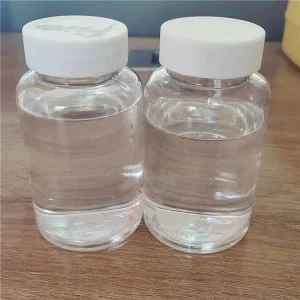
Viscous, clear, colorless, and highly hygroscopic liquids. Characterized by freezing points below 10°C, these compounds act as exceptional non-volatile solvents, coupling agents, plasticizers in synthetic resins, and carriers for poorly water-soluble active pharmaceutical ingredients (APIs). Their terminal hydroxyl functional groups provide immediate sites for esterification, etherification, and urethane linkages.
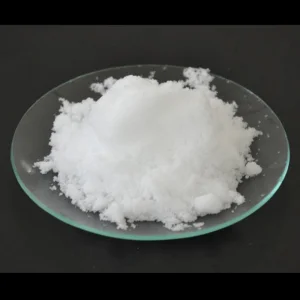
Exhibiting distinct crystalline phase transitions from soft pastes to hard, white crystalline flakes or free-flowing powders. With melting transitions between 37°C and 63°C, grades like PEG 3350, PEG 4000, and PEG 6000 are essential for tablet binding, osmotic laxative formulations, high-end cosmetic emollients, paper coatings, and ceramic thermal binders that vaporize cleanly during sintering.
Ultra-high molecular weight polyethers classified as Polyethylene Oxide (PEO). Formed via suspension polymerization using organometallic catalysts, these resins deliver phenomenal drag-reduction, thickener rheology, and viscoelastic shear stability. Today, high-purity PEO serves as the foundational polymeric matrix for solvent-free all-solid-state lithium metal pouch cells.
How mega-scale petrochemical integration, proprietary Double Metal Cyanide (DMC) catalysis, and direct EO pipeline coupling yield unmatched global cost leadership.
In the procurement calculus of multinational chemical conglomerates, sourcing Polyethylene Glycol and specialty polyether series from Chinese primary producers provides unique technical and commercial advantages. Over the past decade, Chinese chemical manufacturing has transitioned from decentralized batch reactors into vast, vertically integrated chemical industrial clusters located along coastal petrochemical bases (e.g., Jiangsu, Shandong, Zhejiang, and Guangdong).
Chinese facilities are directly co-located with ethylene cracking and silver-catalyzed ethylene oxide synthesis loops. Continuous pipeline feeding of fresh, ultra-pure liquid EO avoids refrigerated bulk transport hazards, lowers intermediate storage oxidation risks, and significantly compresses feed costs.
Traditional KOH ethoxylation introduces allylic alcohol side reactions, resulting in mono-hydroxy unsaturation. Chinese Tier-1 plants widely implement highly active zinc-hexacyanocobaltate DMC catalysts, yielding polyethers with exceptionally low unsaturation (<0.005 meq/g) and narrow PDI.
Closed-loop Distributed Control Systems (DCS) regulate exotherm curves within ±0.3°C during violent ethoxylation steps. Real-time mass flow monitors guarantee exact molar addition of ethylene oxide, safeguarding lot-to-lot batch consistency with minimal operator intervention.
World-class facilities hold multi-jurisdictional compliance certifications: ISO 9001, ISO 14001, and cGMP compliance for excipient streams. Dedicated vacuum stripping towers strip volatile impurities, driving residual ethylene oxide and 1,4-dioxane below 1 ppm.
Exploring how PEG compounds and related polyethers interact across advanced pharmacological, electrochemical, and macromolecular polymer matrices.
PEGylation—the covalent conjugation of Polyethylene Glycol chains to peptide therapeutics, recombinant proteins, and lipid nanoparticles (LNPs)—is the gold standard for clinical drug delivery optimization. By surrounding the therapeutic core with a dynamic, highly hydrated steric hydration shell, PEG minimizes opsonization by the reticuloendothelial system (RES), dramatically shields against enzymatic proteolysis, and elevates systemic elimination half-life from minutes to weeks. In lipid formulations for mRNA delivery, PEG-lipids (e.g., ALC-0159, DMG-PEG 2000) dictate nanoparticle diameter, suppress spontaneous aggregation during cryo-storage, and govern circulation kinetics.
The global race toward non-flammable, energy-dense solid-state lithium-metal batteries relies heavily on high-molecular-weight Polyethylene Oxide (PEO) polymer electrolytes. The repeating ether oxygen atoms (-CH₂-CH₂-O-) possess exceptional solvating power for lithium salts (such as LiTFSI and LiFSI), facilitating lithium cation dissociation through weak coordination bonds. Coupled with inorganic nanoparticles (such as LLZO or nano-alumina), cross-linked PEO networks maintain structural flexibility against metallic lithium dendrite penetration while preserving acceptable room-temperature ionic conductivity.
In aerospace composites, structural adhesives, and military energetic binders, rigid epoxy or polyurethane formulations require microphase-separated rubber domains to arrest brittle crack propagation. Sourcing and synthesizing functionalized liquid rubbers—such as Carboxyl-Terminated (CTBN), Amino-Terminated (ATBN), and Hydroxyl-Terminated (HTBN) nitrile butadiene rubbers—in concert with specialty polyethers provides precise morphological damping, thermal shock resistance, and ballistic integrity without depressing glass transition temperatures (Tg).
Specialty polyether polyols engineered with low unsaturation are the essential soft-segment backbone for waterborne polyurethane dispersions (PUDs), elastomeric sealants, and microcellular elastomers. Additionally, high molecular weight PEG and Polyethylene Glycol ethers are indispensable boundary lubricants in water-glycol hydraulic fluids (HFC fire-resistant hydraulic fluids), metal drawing pastes, and textile processing finishes due to their clean thermal degradation without carbonaceous char residues.
Reference values for industrial, pharmaceutical, and high-purity battery electrolyte grade polyethers.
| Polyether Grade | Avg. Mol. Wt (Mw) | Hydroxyl Value (mg KOH/g) | Physical Form (25°C) | Freezing Point (°C) | Viscosity @ 100°C (cSt) | Typical Application Sector |
|---|---|---|---|---|---|---|
| PEG 200 | 190 – 210 | 534 – 590 | Clear viscous liquid | -15 to -10 | 4.1 – 4.5 | Inks, plasticizers, chemical synthesis |
| PEG 400 | 380 – 420 | 267 – 295 | Clear viscous liquid | 4 to 8 | 6.8 – 7.8 | Pharma softgel fill, cosmetics, PU foam |
| PEG 1000 | 950 – 1050 | 107 – 118 | White waxy solid | 35 to 40 | 16.0 – 19.0 | Textile lubricants, mold release agents |
| PEG 3350 / 4000 | 3000 – 4400 | 25 – 37 | White flakes or powder | 53 to 59 | 75.0 – 110.0 | Laxatives, tableting excipients, ceramics |
| PEG 6000 / 8000 | 5400 – 9000 | 12 – 21 | White fine flakes / prills | 60 to 65 | 180 – 450 | Thermal binders, rubber anti-tack agents |
| Specialty Polyether (PET) | Custom (500 – 5000) | Target-matched | Viscous liquid to paste | Variable | Specification-led | Propellant plasticizers, rocket energetics |
| PEO Battery Grade | 100,000 – 1,000,000+ | < 2 (negligible) | Granular dry powder | 65 to 68 | High intrinsic melt | Solid-state Li-ion polymer electrolytes |
Key technological transitions transforming the commercial manufacturing of polyethylene glycol compounds.
Traditional ethoxylation yields a Gaussian molecular weight distribution (polydisperse). For next-generation antibody-drug conjugates (ADCs) and targeted radiotherapy chelators, single-molecular-weight discrete PEGs with exactly defined chain lengths (e.g., PEG-4, PEG-8, PEG-24; PDI = 1.000) synthesized via convergent organic synthesis are displacing polydisperse polymers to eliminate pharmacokinetic variability.
Accelerating Scope 3 greenhouse gas reduction initiatives have driven leading Chinese petrochemical complexes to introduce bio-ethanol dehydrogenation routes to bio-ethylene and bio-EO. This allows production of 100% renewable carbon-index PEG compounds indistinguishable in technical performance and specification from fossil-derived counterparts, verified by carbon-14 isotopic analysis.
Shifting from linear diols toward multi-arm core architectures (4-arm, 8-arm tripentaerythritol cores) capped with orthogonally reactive end-groups (NHS esters, maleimides, azides, DBCO, thiols). These functional polyethers permit hydrogel formation for surgical hemostats, tissue engineering scaffolds, and in-situ crosslinking polymer sealants with rapid gelation kinetics.
Crucial criteria international buyers must verify when auditing Chinese manufacturing plants for high-purity chemical shipments.
Under international pharmacopeial mandates (USP-NF, Ph. Eur., ChP), Polyethylene Glycol intended for therapeutic use or skin contact requires rigorous Headspace Gas Chromatography (GC-FID/MS) testing. Specific limits: Ethylene Oxide < 1 ppm, 1,4-Dioxane < 10 ppm, and sum of Ethylene Glycol & Diethylene Glycol < 0.25% w/w to ensure complete consumer and biological safety.
Polyethers are inherently hygroscopic. Because water acts as an unwanted chain terminator or blowing agent in urethane and epoxy reactions, export specifications mandate Karl Fischer moisture titration testing with ceilings often contracted at ≤ 0.1% or ≤ 0.05%. Acid values must remain < 0.05 mg KOH/g to avoid poisoning sensitive Lewis acid catalysts during subsequent polymer synthesis.
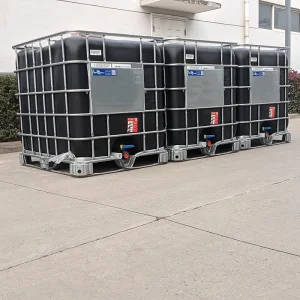
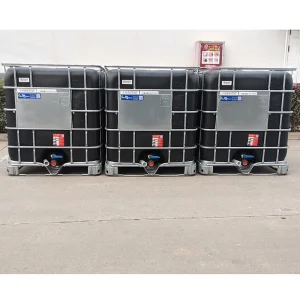
While standard liquid and solid PEGs are non-hazardous under UN Model Regulations, high-purity logistics demand specialized shipping hygiene. Liquid bulk orders require dedicated ISO tank containers equipped with steam heating coils and dry nitrogen headspaces to prevent oxidative yellowing (peroxide formation). Flake solids must be packaged with inner moisture-barrier PE liners to eliminate ambient humidity agglomeration.
Expert responses addressing chemical specifications, custom synthesis, supply chain logistics, and analytical testing.
Expanding industrial synergies across electronic gases, modified synthetic rubbers, fine nitrates, and metallurgical powders.