High-molecular polyethers, cross-linking elastomers, and specialized synthesis materials manufactured under ISO 9001 quality supervision.
Why modern timber mills, conservation laboratories, and furniture conglomerates are migrating toward synthetic cellular bulking chemistry.
Green timber retains massive amounts of free water inside capillary lumina and bound water within cell walls. As wood dries below the Fiber Saturation Point (FSP, ~28-30%), capillary tension causes collapse, end-grain checking, and cupping. Polyethylene Glycol (PEG) acts as an inert chemical bulking agent that infiltrates wood microfibrils, displacing moisture and fixing cell volumes permanently.
Hardwoods with complex cross-grains (e.g., walnut, maple burl, olive wood, and ancient bog oaks) exhibit high tangential-to-radial shrinkage ratios (T/R > 2.2). Conventional kiln drying yields rejection rates surpassing 35%. Modern Chinese factory-grade PEG-400 to PEG-4000 formulations suppress checking entirely, maximizing the recovery of high-value slab lumber.
Waterlogged archaeological wood suffers profound bacterial degradation of secondary cell wall layers (S2), leaving solely fragile lignin frameworks. Without progressive molecular weight PEG immersion regimens (starting at PEG-200 moving to PEG-4000), evaporation causes immediate catastrophic pulverization. Yanxatech delivers precision-graded batches engineered for conservation fidelity.
Comparative analytical breakdown of Polyethylene Glycol grades utilized across commercial woodworking, veneer treatment, and heritage salvage.
| Polymer Grade | Physical Form @ 25°C | Hydroxyl Value (mg KOH/g) | Kinematic Viscosity (mm²/s) | Penetration Profile | Core Application |
|---|---|---|---|---|---|
| PEG-400 | Viscous Clear Liquid | 264 – 300 | 105 – 130 (@20°C) | Deep sub-cellular diffuse | Turnings, relief carvers, rapid soak |
| PEG-1000 | Semi-solid Waxy Paste | 102 – 122 | 16.0 – 19.0 (@100°C) | Balanced wall-capillary lock | Museum preservation, archaeological timbers |
| PEG-1500 | White Waxy Flake / Block | 70 – 80 | 25.0 – 32.0 (@100°C) | Intermediate lumen fill | Green cross-cut slab stabilizing |
| PEG-4000 | Solid Flakes / Micro-prills | 26 – 32 | 110 – 170 (@100°C) | Macro-void crystallization | Final stage structural rigidity capping |
Standard industrial vat submersion utilizing 30% to 50% w/w aqueous PEG-1000 bath heated to 45°C–60°C. Elevated temperatures lower polymer viscosity and expand wood pits, enabling the stabilizer to displace interstitial sap water via passive concentration gradient diffusion.
High-throughput automated timber processors deploy Bethell or Lowry cyclic autoclave protocols. Initial evacuation at -0.09 MPa evacuates air from wood cells, followed by pressurized flooding at 1.0–1.4 MPa. Processing cycles drop from months to hours.
Treated timber retains PEG within cell wall voids. Post-treatment conditioning requires gradual psychrometric control to prevent surface blooming or weeping. The wood dries under regulated RH (60% to 45%), producing case-hardened, crack-free dimensional perfection.
Next-generation polymer functionalization, green synthesis, and reactive in-situ fixation methodologies.
Optimization of narrow molecular weight distributions (Polydispersity Index < 1.08). Elimination of mono-ethylene glycol trace monomers, avoiding off-gassing and reducing corrosion potential against metal joinery and saw blades.
Functionalizing PEG chains with cross-linkable alkoxysilane groups. Once the polymer saturates the cell wall matrix, low-temperature thermal curing anchors the chains to hydroxyls on wood hemicellulose, rendering the stabilization non-leachable even in exterior applications.
Transitioning from petrochemical feedstocks to 100% bio-based ethylene oxide precursors. Yanxatech is advancing carbon-neutral supply lines compliant with stringent EU Deforestation Regulations (EUDR) and cradle-to-grave Life Cycle Assessments (LCA).
Mitigating import risk through strict adherence to international trade guidelines, safety compliance, and containerized logistics.
Industrial-grade Polyethylene Glycols are classified non-hazardous under EU REACH regulations, TSCA (USA), and MEPC (China). Every container ships accompanied by complete, updated 16-section Safety Data Sheets (SDS) and authentic lot-specific Certificates of Analysis (COA).
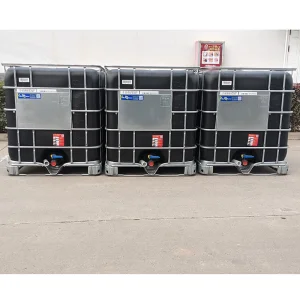
From 25 kg poly-lined kraft sacks for solid flakes (PEG-1500 / 4000) to 200 L fluorinated HDPE drums and 1000 L IBC totes for liquid grades (PEG-400). Inert gas blanket sealing guarantees complete isolation from atmospheric moisture during oceanic transit.
Yanxatech System Industries Limited coordinates end-to-end multi-modal logistics from Qingdao, Shanghai, and Tianjin hubs. Our experienced export teams handle customs manifest declarations, fumigation documentation, and prompt port clearance assistance worldwide.
Authoritative operational answers from our polymer synthesis laboratories and timber engineering specialists.
Essential functional chemicals, curing resins, and high-performance metallic precursors available for integrated global logistics dispatch.