



Direct supply from audited processing units: specialized powders, synthetic rubbers, and functional industrial compounds certified for critical enterprise workflows.


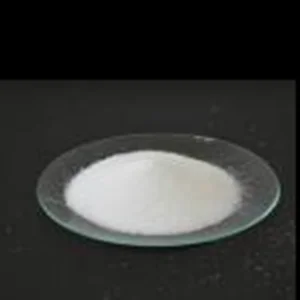




Ammonium Sulfate Nitrate (ASN, typical formulation 26% N + 13% S to 27% N + 12% S) represents a true chemical double salt: 2NH4NO3·(NH4)2SO4. Unlike physical dry blends, our factory-synthesized ASN resolves segregation vulnerabilities while mitigating atmospheric volatilization.
ASN delivers immediate bioavailability via nitrate (NO3-) ions while maintaining persistent soil nitrogen levels via ammoniacal (NH4+) fractions. This prevents leaching while accelerating initial cellular mitosis across commercial crops.
Nitrogen uptake efficiency (NUE) collapses under sulfur deficit. Our integrated double salt synthesizes water-soluble sulfate (SO42-) directly into the molecular crystal lattice, providing an ideal 2:1 to 2.5:1 N-to-S stoichiometry for enzymatic protein assembly.
Compared to standard urea prills which frequently lose 15%–35% of nitrogen through urease-driven ammonia gas volatilization in calcareous soils, factory-granulated ASN retains over 96% elemental nitrogen recovery across extreme thermal conditions.
Beyond modern precision agriculture, bulk ASN acts as an indispensable chemical stabilizer, specialized oxidant mediator, and bath additive within electroplating, industrial dyeing operations, and advanced fire-retardant building material formulations.
The transition from low-efficiency synthetic commodities toward engineered nutrient carriers has altered worldwide commercial procurement patterns across major economic zones.
With stringent EU emission mandates curbing ammonia air losses from raw urea, ASN has emerged as a premium regulatory-compliant input. Agronomic operations across France, Germany, and Poland rely on its chemically stable structure to satisfy strict farm-gate nitrogen emission ceilings.
Large-scale soybean, coffee, sugarcane, and citrus operations in Brazil, Colombia, and Central America face chronic tropical sulfur depletion. ASN neutralizes the leaching risks posed by intense seasonal precipitation, preserving root-zone nutrient access.
Intensive industrial development across Southeast Asia has expanded demand for technical-grade ammonium nitrate salts. Our bulk supply chain fuels large-scale industrial compounding, specialized water treatment, and downstream polymer production facilities.
| Analytical Parameter | Guaranteed Factory Standard | Testing Protocol | Operational Commercial Significance |
|---|---|---|---|
| Total Nitrogen (N) | ≥ 26.0% | ISO 5315 / Devarda Method | Balanced split: ~19% Ammoniacal-N and ~7% Nitrate-N |
| Sulfate Sulfur (S) | ≥ 12.0% - 13.0% | Gravimetric BaSO4 Determination | Fully water-soluble, immediately accessible plant nutrient |
| Moisture (H2O) | ≤ 0.5% - 0.8% | Karl Fischer Titration | Prevents physical recrystallization and pneumatic caking |
| Free Acidity (as H2SO4) | ≤ 0.05% | Acid-Base Potentiometric Titration | Non-corrosive to bulk ship holds and storage infrastructure |
| Particle Size Distribution | 2.00 mm – 4.75 mm (≥ 95%) | ISO 8397 Sieve Analysis | Optimized for pneumatic broadcast and air-seeder systems |
Because ammonium nitrate compounds carry strict global compliance requirements, our export department integrates comprehensive dangerous goods management, destination testing, and end-to-end certification.
Every wholesale batch undergoes standardized UN Gap and Detonation Resistance Testing to prove resistance to self-sustaining decomposition. Compliance certificates are logged for port authorities and international maritime transport.
Shipped in full compliance with International Maritime Organization guidelines under UN 2067 (Class 5.1 Oxidizing Substances) or non-hazardous declarations depending on formulation ratios and destination border approvals.
To withstand long sea voyages through equatorial zones, prills are treated with advanced biodegradable amine coatings. This barrier maintains high crush strength and prevents atmospheric moisture reabsorption inside humid destination warehouses.
We work with internationally recognized verification agencies including SGS, Bureau Veritas, and Intertek to perform pre-shipment sampling, draft surveys, particle size verification, and chemical assay re-checks before bill-of-lading issuance.
Real-world industrial, manufacturing, and agricultural implementations engineered to maximize material efficiency.
Canola and brassica oilseeds require high sulfur inputs during early vegetative growth. ASN applied as an early spring top-dressing delivers immediate nitrate to overcome cold-soil uptake blocks, while stable ammonium and sulfate support continuous bud formation.
In high-pH limestone soils across Mediterranean and Middle Eastern regions, conventional urea experiences elevated surface ammonia vaporization. The acidic reaction of ammonium sulfate in ASN drops the micro-environment pH at the root interface, unlocking bound phosphorus and micronutrients.
Factory plants utilize high-purity crystalline ASN fractions as specialized reaction regulators, textile print-paste coagulants, and raw materials for specialty flame-retardant composites that require stable nitrogen-sulfur matrices under elevated temperatures.
Our long-term manufacturing roadmap integrates green synthesis technologies, bio-based conditioning agents, and automated batch traceability.
Gradual introduction of renewably powered electrolysis for ammonia feedstock, targeting a measurable reduction in scope 1 and scope 2 emissions across the synthesis cycle.
Replacing standard wax-amine surface treatments with plant-derived, microplastic-free moisture barriers that comply with forthcoming EU 2026 soil health criteria.
Implementing ultrasonic fluid-bed drying and cooling systems to increase crushing strength to ≥45N, further minimizing fine generation during rough bulk vessel handling.
Direct integration of dual nitrification inhibitors (DCD/MPPA) into the ASN molten slurry, extending ammoniacal nitrogen retention in flooded soils up to 70 days.
Audited production lines providing high-purity inorganic salts, reactive liquid polymers, and precision industrial gases ready for international port departure.








Key clarifications addressing chemical architecture, maritime logistics, storage stability, and quality parameters.