Explore engineering-grade materials rigorously verified for purity, particle morphology, and international export safety compliance.







A rigorous examination of powder metallurgy, gas-atomized microspherical morphology, thermodynamic kinetics, and precision processing in industrial supply chains.
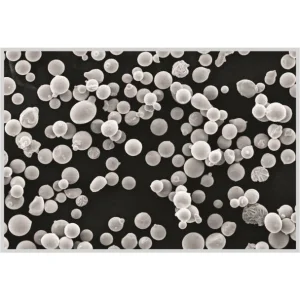
Super Magnesium Powder (often classified in advanced metallurgy as atomized micro-spherical magnesium or ultra-fine rasping-free magnesium) represents the pinnacle of reactive alkaline earth engineering. Traditional mechanical milling, crushing, or rasping yields irregular, jagged flake morphologies riddled with micro-cracks, broad particle size distributions (PSD), and heavy passive oxidation layers (MgO and Mg(OH)2). In contrast, modern super magnesium powder is manufactured via closed-loop inert gas atomization (utilizing high-purity supersonic argon or nitrogen streams). This ultra-rapid solidification process yields near-perfect spherical geometry with low specific surface friction, extraordinary powder flowability (Hall flow rate ≤ 35 s/50g), and highly dense packing characteristics (tap density exceeding 1.05 g/cm³), vastly lowering porosity defects in secondary fabrication.
From an industrial chemistry perspective, magnesium is characterized by an electronegativity of 1.31 and a standard reduction potential of -2.372 V, endowing it with extreme chemical reduction capacity. For aerospace propellants, defense countermeasure pyrotechnics, and pharmaceutical Grignard reagents, the primary purchasing metric is Active Magnesium Content (the percentage of elemental Mg capable of reacting to release hydrogen gas under quantitative acid titration). Conventional powders degrade to <95% active content due to ambient humidity. Super magnesium powder engineered in our state-of-the-art facilities undergoes controlled nanoscale passivation—establishing a sub-nanometer protective skin that preserves active magnesium content above 99.0% over multi-month transit intervals while sustaining instantaneous combustion kinetics upon activation.
Comprehensive analytical data based on laser diffraction sizing (ISO 13320), ICP-OES trace impurity profiling, and gasometric active assay titrations.
| Analytical Parameter | Grade SMP-AERO (Spherical AM/Aero) | Grade SMP-PYRO (Energetics/Flares) | Grade SMP-CHEM (Grignard/Reagents) | Standard Test Methodology |
|---|---|---|---|---|
| Active Magnesium Assay (Mg) | ≥ 99.85% | ≥ 99.20% | ≥ 99.50% | Gasometric Titration (Acid Digestion) |
| Particle Morphology | Highly Spherical (Aspect Ratio ≥ 0.92) | Spheroidal to Granular | Screened Granular / Nodular | Field Emission SEM / Dynamic Imaging |
| Nominal Particle Size (D50) | Custom 20 μm, 45 μm, 75 μm | 100 – 300 Mesh (50 – 150 μm) | 20 – 80 Mesh (180 – 850 μm) | Laser Diffraction (Malvern Mastersizer) |
| Apparent Density | 0.85 – 1.05 g/cm³ | 0.70 – 0.88 g/cm³ | 0.65 – 0.80 g/cm³ | Scott Volumeter (ASTM B329) |
| Tap Density | 1.05 – 1.25 g/cm³ | 0.85 – 1.02 g/cm³ | 0.80 – 0.95 g/cm³ | Tap Density Analyzer (ASTM B527) |
| Trace Impurities: Fe + Si + Cu | ≤ 0.04% Max | ≤ 0.15% Max | ≤ 0.08% Max | ICP-OES Optical Emission Spectroscopy |
| Moisture Absorption (H2O) | ≤ 0.03% (Hermetic Pack) | ≤ 0.05% | ≤ 0.04% | Karl Fischer Titration / Loss on Drying |
| UN Transport Hazard Rating | UN 1418, Class 4.3 (4.2 Sub-risk) | UN 1418, Class 4.3, PG II | UN 1869, Class 4.1, PG III | UN Manual of Tests and Criteria, Part III |
Direct mine-to-refinery consolidation delivering unprecedented economic stability, continuous tonnage availability, and metallurgical purity.
China accounts for over 85% of global primary magnesium ingot production. Our industrial facilities in Shaanxi and Shanxi sit directly atop immense high-grade dolomite reserves. Operating integrated Pidgeon-process thermal reduction complexes fueled by localized industrial off-gas, our facilities eliminate trans-provincial raw material transport costs and decouple wholesale pricing from the extreme logistics premiums suffered by Western re-processors.
Unlike outdated mechanical abrasive mills, our Chinese modern facilities boast multi-level vacuum induction melting (VIM) coupled with high-flow supersonic gas atomization towers. High-purity argon (Ar ≥ 99.999%) is continuously recycled and purified through active gettering systems, preventing oxygen pickup during molten stream break-up. This automated process ensures ultra-tight sieve cuts, near-zero hollow spheres, and batch-to-batch chemical repeatability.
Magnesium powder export represents severe regulatory barriers due to UN Class 4.3 (water-reactive flammable solids) compliance. Our manufacturing facility maintains direct maritime agreements with dedicated Class 4 dangerous cargo terminals at Tianjin, Qingdao, and Shanghai ports. We provide UN-certified heavy-gauge carbon steel drums, argon-flushed vacuum sealed aluminum barrier liners, and all GHS/IMDG safety documentation.
Structural realignments across green metallurgy, solid-state energy vectors, and bio-absorbable manufacturing reshaping magnesium consumption.
The aerospace and medical industries are rapidly substituting titanium and aluminum with lightweight magnesium alloys (such as WE43, AZ91, and ZK60). Laser Powder Bed Fusion (LPBF) demands ultra-high circularity, absence of satellite particles, and minimal internal gas entrapment. Super magnesium powder engineered with D50 values between 20–53 μm provides the uniform recoater spreading and stable melt-pool dynamics vital for void-free lightweight flight components.
As the international community transitions toward clean energy, magnesium hydride (MgH2) has surfaced as the premier solid-state hydrogen storage medium due to its extraordinary theoretical capacity (7.6 wt.% H2). Synthesizing nano-catalyzed MgH2 at scale requires ultra-high-purity super magnesium powders with engineered crystal defects and high specific surface reactivity. Our advanced milling and atomization methods create reactive sites that lower hydrogen desorption temperatures.
Modern defense infrared countermeasure (IRCM) flares and spectral signature systems require exact, mathematically reproducible burn rates. Irregular milled powders introduce fatal combustion erraticism and smoke signature variations. Spherical super magnesium powders guarantee laminar flame front advancement, predictable radiative intensity, and enhanced loading density in advanced MTV (Magnesium-Teflon-Viton) energetic formulations.
Delivering uncompromised thermodynamic kinetics across specialized defense, pharmaceutical, metallurgical, and biomedical fabrication.
Integrated as high-energy metallic fuel in solid rocket motors and underwater propulsion ramjets. The extreme heat of combustion of pure magnesium (601.6 kJ/mol) dramatically enhances chamber pressure and specific impulse (Isp) while maintaining stable propellant slurry viscosity.
Organomagnesium chemistry demands instantaneous reaction initiation without tedious mechanical chipping. Super magnesium powder provides an oxide-free surface layer that initiates Grignard reagent formations (R-Mg-X) quickly, eliminating hazardous thermal runaways.
Additive manufacturing using ultra-pure Mg powders creates custom bone fixation screws and porous vascular stents. The human body naturally metabolizes magnesium, eliminating secondary hardware removal surgeries while matching human bone elastic modulus.
Injected via submerged lances into molten pig iron ladles. Super magnesium powder reacts aggressively with sulfur impurities to generate MgS slag, lowering sulfur concentrations down to ≤ 0.001% required for offshore pipeline steels and ultra-high-strength automotive sheet.
Mitigating combustion safety risks, optimizing flow characteristics, and establishing turnkey raw material pipelines.
For buyers operating in high-humidity territories or demanding heightened safety margins, we offer engineered passivation using stearic acid, paraffin, silicone, or specialized fluoropolymers. This microscopic layer halts atmospheric moisture degradation without degrading the instantaneous activation energy required during combustion or metallurgical alloy dissolving.
Optimizing powder packing fractions is critical for energetic cast systems and powder metallurgy compacting. Our technical team calculates theoretical packing maximums using Andreasen or Furnas models, precisely blending spherical fractions (e.g., combining 20 μm fine with 120 μm coarse) to maximize green compact density and minimize sintering shrinkage.
Handling fine magnesium powders presents inherent deflagration hazards (Kst values, Minimum Ignition Energy [MIE], and Minimum Explosive Concentration [MEC]). Yanxa provides complete explosion parameter documentation, electrostatic grounding requirements, and custom nitrogen-blanketed feed hopper designs to ensure our clients operate safely.
A comprehensive procurement playbook for engineering heads, supply chain managers, and dangerous goods logistics directors.
International industrial procurement teams frequently encounter discrepancy risks when dealing with intermediary traders—notably mismatched active magnesium percentages, high moisture content inducing pre-mature drum pressurization, or severe iron contamination. Every single Yanxa shipment is backed by lot-traceable documentation: certified ICP-OES elemental analysis, laser diffraction PSD plots, and gas-displacement density verification. Third-party pre-shipment inspections via SGS, Bureau Veritas, or CCIC are seamlessly accommodated at our port consolidation warehouses.
Procuring Class 4.3 dangerous goods demands specialized maritime logistics expertise. Improper container stowing, absence of desiccants, or non-compliant UN drums lead to catastrophic port detentions, customs seizures, or demurrage penalties. Yanxa provides end-to-end freight hedging: verified dangerous goods declarations (DGD), IMDG-compliant ocean container consolidation, dry-bulk packaging in 20kg to 100kg hermetic steel drums, and container desiccants ensuring your shipment arrives dry, unoxidized, and production-ready.
In-depth answers addressing material specifications, dangerous cargo transportation, reactivity testing, and customization capabilities.
Explore our full metallurgical, gas, and specialty polymer catalogue designed for high-performance industrial lines.