


Direct-from-factory telechelic liquid polymers formulated for precise epoxy-matrix toughening, polyurethane prepolymer crosslinking, and high-tack elastomer adhesives serving industrial manufacturing clusters in Paris, Lyon, Toulouse, and Hauts-de-France.
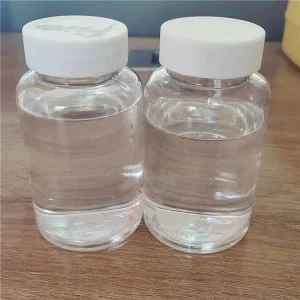
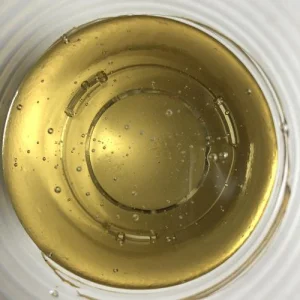

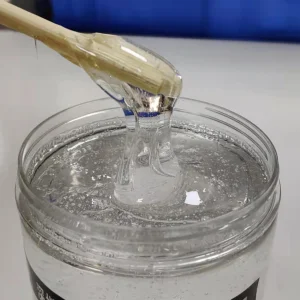
France represents one of Europe's most sophisticated markets for high-performance elastomers, driven by intensive R&D mandates under the France 2030 Investment Plan and rigorous green transition benchmarks set by the European Union. Engineering procurement across the Occitanie aerospace cluster, the Auvergne-Rhône-Alpes chemical corridor, and the Hauts-de-France automotive hub requires reactive liquid rubbers exhibiting uncompromising batch stability, micro-phase separation control, and absolute purity.
Structural film adhesives and matrix resins for aerospace carbon-fiber composites require CTBN and EPB to eliminate brittle micro-fractures under extreme thermal cycling (-60°C to +150°C). French tier-1 suppliers mandate uniform molecular weight dispersion ($M_w/M_n < 1.8$) to guarantee mechanical fatigue life.
The "Battery Valley" in Hauts-de-France requires thermal conductive gap fillers, potting agents, and crash-resistant structural bonding. Functionalized rubbers such as ATBN and HTBN provide dynamic energy dissipation and dielectric isolation for next-generation electric vehicle powertrains.
From waterproofing membranes along the Grand Paris Express subterranean lines to elastomeric damping pads under SNCF high-speed TGV tracks, liquid hydroxyl-terminated polymers ensure decades of hydrolytic stability, UV resistance, and vibration attenuation.
Importing functional synthetic elastomers into the French Republic demands comprehensive alignment with the European Chemicals Agency (ECHA) standards. Chinese chemical manufacturing partners cannot merely compete on cost; they must deliver institutional-grade transparency across toxicology dossiers, environmental safety, and customs declarations.
All delivered chemical monomer precursors and registered oligomeric grades strictly adhere to EC Regulation No 1907/2006 (REACH). We maintain verified Only Representative (OR) structures within the European Union, ensuring zero regulatory or import tariff exposure for French distributors and industrial end-users.
Every shipment is accompanied by bilingual Safety Data Sheets (French and English) aligned with Regulation (EC) No 1272/2008 (CLP). Complete raw material traceability, non-SVHC (Substances of Very High Concern) declarations, and RoHS/WEEE compliance certificates are issued for each production batch.
Prior to dispatch, liquid rubber lots undergo Gel Permeation Chromatography (GPC), Fourier-Transform Infrared Spectroscopy (FTIR), and Brookfield viscosity verification. Retention samples are warehoused for 24 months to ensure continuous technical accountability throughout manufacturing runs.
| Polymer Grade Type | Primary Functional Group | Typical Viscosity (mPa·s @ 25°C) | Key European Norms / Standards | Target French Application |
|---|---|---|---|---|
| CTBN (1300x8 / 1300x13 equivalent) | Carboxyl (-COOH) | 40,000 – 160,000 | REACH Registered, RoHS Compliant | Structural epoxy paste for aerospace & railway |
| HTPB / HTBS Random Copolymers | Hydroxyl (-OH) | 4,000 – 9,000 | EN 1504-2 Waterproofing standard | Polyurethane elastomeric bridge membranes |
| ATBN Amine-Terminated Nitrile | Primary/Secondary Amine (-NH₂) | 100,000 – 250,000 | ISO 9001:2015, REACH SVHC Clear | Automotive hem-flange & crash adhesives |
| MLPB Maleic Anhydride Grafted | Maleic Anhydride Acid Adduct | 5,000 – 25,000 | REACH Dossier Tier 1 Compliant | Adhesion promoter for rubber-to-metal bonding |
Procurement directors across multinational formulators face margin pressures and supply vulnerability from single-source European petrochemical producers. Partnering directly with tier-1 Chinese liquid rubber manufacturers offers French industrial operations a high-resilience alternative backed by complete monomer self-sufficiency and state-of-the-art anionic polymerization infrastructure.
Direct integration with domestic steam cracking facilities guarantees continuous butadiene and acrylonitrile (ACN) monomer supply. This insulates French industrial buyers against the upstream supply shocks frequently experienced within the Western European refining sector.
Our plants operate high-pressure multi-stage autoclaves allowing tailored functionalization. Whether target specifications require strictly difunctional telechelic terminations or precise maleic anhydride graft ratios, batch repeatability is held within tight tolerances ($\pm 1.5\%$).
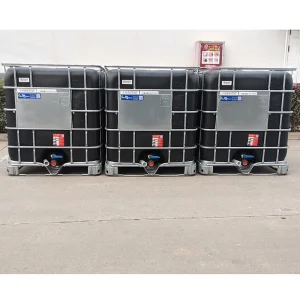
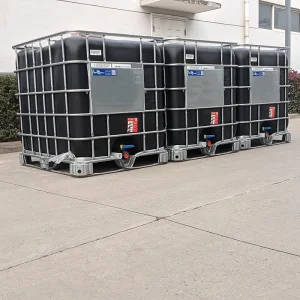
Liquids are packaged under dry nitrogen blankets in UN-certified steel drums (200L), intermediate bulk containers (1000L IBCs), or insulated ISO tanks. Regular scheduled sea freight routes from Shanghai and Ningbo dock directly at Port of Le Havre (serving northern industrial zones) and Fos-sur-Mer / Marseille (serving southern regions).
The integration of telechelic liquid rubbers into thermoset networks revolves around controlled micro-phase separation. In unmodified state, standard DGEBA epoxy resins exhibit extreme brittleness due to high crosslink density. The deliberate incorporation of functionalized liquid butadiene rubbers addresses critical failure modes across French engineering operations:
When pre-reacted with liquid bisphenol-A epoxy at 130°C–150°C using triphenylphosphine catalysts, CTBN terminal carboxylic acid groups esterify into stable diglycidyl ether adducts. During subsequent amine curing, elastomeric rubber domains (1–5 µm) precipitate throughout the rigid epoxy matrix, boosting fracture toughness ($K_{1c}$) by up to 350% without compromising glass transition temperature ($T_g$).
For civil structures exposed to alpine freeze-thaw cycles or Atlantic maritime moisture, liquid rubbers with low glass transition temperatures ($T_g < -70^\circ\text{C}$), such as HTPB and HTBS, serve as hydrophobic soft segments in MDI/TDI-based polyurethane coatings. This structure yields dynamic crack-bridging elongation exceedances over 600%.
French vehicle OEMs demand structural adhesives that endure high peel forces during high-speed stamping and electrodeposition (E-coat) paint bake ovens (180°C). Reactive liquid polymers with tailored nitrile contents (10% to 26% ACN) deliver the polarity balance required for strong adhesion to oiled galvanized steel and aluminum alloys.
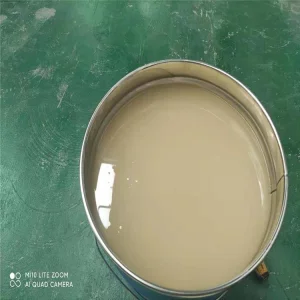
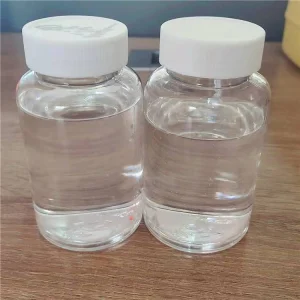
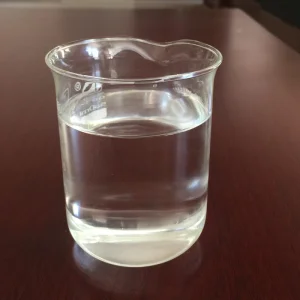
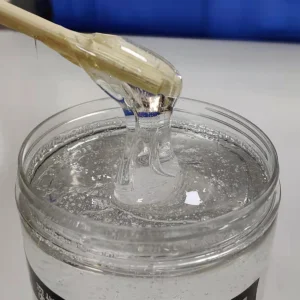
Comprehensive catalog of reactive liquid synthetic polymers, functionalized polybutadienes, and specialized polyether polyols formulated to European industrial specifications.

Detailed technical, logistical, and commercial inquiries frequently addressed by our European export division for chemical engineers and procurement professionals operating in France.
All polymers and precursor monomers exported to France are covered either through pre-allocated tonnage registrations held by our European Only Representative (OR) or directly supported via our clients' OR registrations. Each container includes a formal Certificate of REACH Conformance detailing ECHA substance reference numbers.
Production, lot sampling, and pre-shipment COA verification require 7–10 working days. Direct container transit from Ningbo or Shanghai to Port of Le Havre or Fos-sur-Mer requires 28–35 days at sea. Expedited air-freight sampling (1 kg to 20 kg) is delivered via DHL/FedEx within 4–6 business days.
CTBN reacts with terminal oxirane groups of epoxy resins prior to final curing. During crosslinking, micro-cavitation and localized plastic shear banding around precipitated rubber particles relieve internal mechanical stresses, raising impact resistance by 200–350% without lowering thermal resistance ($T_g$).
Yes. Our polymerization reactors can modify butadiene-to-acrylonitrile ratios (e.g., 10%, 17%, or 26% ACN) to fine-tune solubility parameters with specific curing resins. We also tailor end-group carboxylic or hydroxyl functionality to between 1.85 and 2.35 per polymer chain.
Standard liquid rubber shipments are dispatched in 200L UN-rated steel drums (approx. 180–190 kg net weight) packed under dry nitrogen to inhibit oxidative skinning, 1,000L composite IBCs, or heated/insulated ISO tank containers for high-volume continuous formulators.
We implement closed-loop Distributed Control Systems (DCS) to monitor reactor temperatures within $\pm 0.2^\circ\text{C}$ throughout anionic polymerization. Brookfield RVT/DVT-II viscometers and high-temperature GPC testing verify each batch before the Certificate of Analysis is issued.
Speak with our polymer synthesis engineers regarding target viscosities, functional equivalents, pilot samples, and port-of-entry pricing for Le Havre and Fos-sur-Mer.
