
Epoxy Modifier



Pre-tested against stringent EU chemical norms and optimized for structural epoxy toughening, microelectronic encapsulation, and elastomeric seals across northern Italian industrial clusters.



Italy represents Europe's second-largest manufacturing powerhouse, anchored by advanced mechanical engineering, luxury hypercar manufacturing, world-class nautical yards, and sustainable civil construction.
The Italian automotive sector—concentrated in Piedmont (Turin) and the famed Motor Valley of Emilia-Romagna (Modena, Bologna, Maranello)—is undergoing a decisive technological shift toward electrification and light-weighting. Carbon fiber reinforced polymers (CFRP) and multi-material joints involving aluminum-magnesium extrusions require advanced structural adhesives capable of withstanding intense dynamic stress and thermal shock.
Liquid carboxyl-terminated nitrile butadiene rubber (CTBN) and epoxy-modified liquid polybutadiene (EPB) have emerged as indispensable phase-separating tougheners. By precipitating microscopic rubber domains (0.5–2.0 µm) within cross-linked epoxy matrices, our liquid rubbers arrest micro-crack propagation without sacrificing heat distortion temperature (HDT), fulfilling demanding automotive crash-durability specifications.
Italy leads the world in mega-yacht construction and maritime engineering, centered across shipyards in Genoa, Viareggio, Livorno, and Trieste. The maritime operational environment subjects hulls, teak decks, and subsea assemblies to continuous UV radiation, galvanic corrosion, and hydrostatic flexing.
Formulators in these regions leverage liquid telechelic hydroxyl-terminated polybutadiene (HTPB/HTBS) and maleic anhydride grafted polybutadiene (MLPB) to formulate elastomeric moisture barriers, marine primers, and hydrophobic polyurethane polyureas. Their completely hydrophobic hydrocarbon backbones ensure virtually zero moisture transmission, eliminating osmotic blistering and structural debonding under prolonged Mediterranean immersion.
Unlike traditional solid rubbers that require aggressive high-shear Banbury mastication, liquid reactive elastomers offer processable fluid viscosity at ambient or moderate temperatures, polymerizing directly into thermosetting networks.
Reacts directly with oxirane rings of Bisphenol A/F epoxy resins. Forms spherical sub-micron elastomeric phases during gelation that dissipate fracture energy via localized shear yielding and cavitation, boosting T-peel strength up to 350%.
Rapidly cross-links at room temperature with aliphatic and cycloaliphatic amine curatives. Engineered for structural two-component epoxy adhesives and repair pastes requiring instant green strength and exceptional oil-surface wetting.
Possesses both terminal and internal oxirane groups coupled with an unsaturated diene spine. Offers dual-curing flexibility (thermal and UV-cationic), exhibiting near-zero moisture absorption and pristine dielectric insulation parameters.
Combines non-polar polybutadiene flexibility with highly reactive anhydride functionalities. Acts as an unrivaled coupling promoter between inorganic fillers (silica, ATH, talc) and rubber matrix, improving mechanical dispersion.
Hydroxyl-terminated random copolymers engineered for reactive polyurethane synthesis. Form soft elastomeric segments that maintain rubbery elastic recovery at temperatures as low as -55°C in alpine and high-altitude deployments.
Engineered low-, medium-, and high-molecular-weight reactive polyethers designed to formulate hydrolysis-resistant polyurethane sealants, offering superior bio-based resin compatibility and sustainable carbon footprint metrics.
| Polymer Nomenclature | Active Functional Group | Typical Viscosity (25°C, mPa·s) | Tg (°C) | Recommended Italian Industrial Focus |
|---|---|---|---|---|
| CTBN Series | Carboxyl (-COOH) | 40,000 – 160,000 | -52 to -38 | Automotive Crash Adhesives & Wind Blades |
| ATBN Series | Amine (-NH2 / -NH) | 80,000 – 220,000 | -50 to -35 | Fast-Curing Construction Repair, Industrial MRO |
| EPB Series | Epoxy (Oxirane) | 15,000 – 65,000 | -45 to -20 | Electronic Encapsulation & PCB Potting |
| HTBS / HTBN | Hydroxyl (-OH) | 20,000 – 90,000 | -60 to -40 | Cryogenic Sealants, Nautical Deck Mastic |
| MLPB Series | Maleic Anhydride | 5,000 – 35,000 | -75 to -60 | Tire Tread Compound Additive, Cable Sheathing |
| LSBR Series | Unsaturated Olefin | 2,500 – 18,000 | -65 to -30 | Tackifiers, Friction Lining, Pressure Sensitive Tape |
From architectural preservation of ancient stone facades to high-speed railway infrastructure along the Milan-Rome corridor, liquid rubber elastomers provide decisive longevity.
Italy holds the largest number of UNESCO World Heritage Sites. Historical masonry and marble monuments are subjected to micro-subsidence, rising moisture, and seismic vibrations. Conventional rigid cementitious mortars or polyurethane coatings frequently crack or yellow, destroying historic aesthetics.
By blending L-XNBR (Random Carboxy Liquid Nitrile) and HTBS into breathable hybrid polymer sealants, Italian conservation engineers formulate invisible, high-elasticity membranes capable of over 600% elongation at break. The formulation breathes water vapor while forming a relentless barrier to liquid water and dissolved de-icing salts, protecting structural integrity without altering stone patinas.
The Italian national rail network (RFI) and highway alpine tunnels demand vibration-damping rail boot compounds and expansion joint sealants that maintain elasticity across a blistering temperature range from -30°C in winter Brenner Pass crossings to +50°C in southern Italian sun.
Formulations based on Maleic Anhydride Grafted Polybutadiene (MLPB) provide molecular coupling to silica and carbon black fillers. The resulting polyurethane elastomer pads exhibit negligible compression set, exceptional dynamic fatigue endurance, and proven dampening coefficients over decades of continuous train passes.
The famed Italian footwear clusters in Riviera del Brenta (Veneto) and Fermo-Macerata (Marche) supply elite global luxury houses. These brands mandate solvent-free, odorless, and ultra-durable sole-to-upper bonding that resists hydrolysis in tropical export markets.
CTBN and EPB-modified reactive polyurethane hot melts (HMPUR) deliver immediate initial tack combined with flexible ultimate strength. The modified polymer structure guarantees zero plasticizer migration, eliminating leather discoloration or stiffening over extended shelf lifetimes.
Italian EV battery enclosure manufacturers face aggressive thermal runaway requirements under UN ECE R100 regulations. Structural thermal conductive adhesives must bridge the gap between lithium-ion cell modules and liquid cooling plates, delivering high thermal conductivity alongside structural bonding and dielectric breakdown protection.
Utilizing Epoxidized Polybutadiene (EPB) as a reactive reactive diluent and flexibilizer allows highly filled formulations (up to 85% by weight spherical aluminum oxide or boron nitride) to maintain pumpable rheology while retaining 15 MPa lap shear strength and 25 kV/mm dielectric strength.
In a global chemical landscape marked by feedstock volatility and energy disruptions, YANXA's fully integrated production infrastructure guarantees Italian partners uninterrupted supply, strict molecular precision, and commercial stability.
Automated monomer feeding and multi-zone polymerization reactors monitor temperature within ±0.3°C, ensuring narrow molecular weight distribution (PDI < 1.8) and flawless end-group functionalization without residual inactive telechelic fractions.
Every lot exported to Italian ports (Genoa, La Spezia, Naples, Trieste) is supported by comprehensive REACH dossiers, extended Safety Data Sheets (eSDS), CLP compliance labels, and zero nonylphenol or SVHC contaminants.
Direct temperature-controlled sea freight and expedited overland express with inert gas nitrogen-blanketed UN-approved steel drums (200L) and intermediate bulk containers (IBCs 1000L), preventing oxidation during trans-continental transit.
Explore our comprehensive industrial lineup available for bulk supply, technical trial evaluation, and contract synthesis across the Italian and broader European single market.


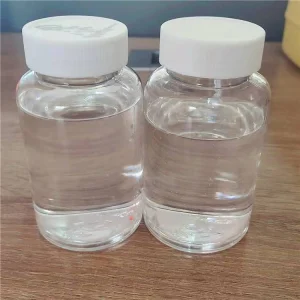


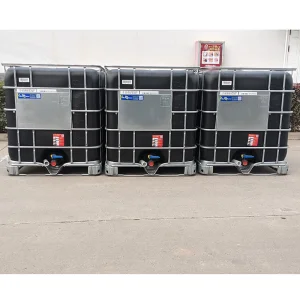


Essential guidance covering chemical compatibility, quality auditing, EU regulatory compliance, and container logistics.
Whether you require drop-in CTBN equivalents for automotive structural adhesives or custom-engineered hydroxyl prepolymers for Italian maritime coatings, our engineering team provides direct technical consultation, lot COAs, and rapid-dispatch evaluation samples.