Factory-direct synthesized reactive telechelic and modified liquid rubbers tailored for heavy-duty epoxy reinforcement, structural sealants, and elastomeric binders across Abu Dhabi, Dubai, and Sharjah industrial clusters.


The United Arab Emirates represents one of the world's most aggressive physical operating environments for synthetic polymers, coatings, sealants, and structural composites. Spanning the emirates of Abu Dhabi, Dubai, Sharjah, Ras Al Khaimah, Fujairah, Ajman, and Umm Al Quwain, industrial installations face a dual thermodynamic assault: surface substrate temperatures exceeding 75°C under direct solar irradiance and extreme hyper-saline atmospheric moisture along the Arabian Gulf and Gulf of Oman coastlines.
Traditional solvent-borne coatings and rigid polyurethane membranes exhibit premature embrittlement, micro-cracking, and substrate delamination within 18 to 36 months when exposed to these hyper-arid and coastal conditions. As a result, municipal infrastructure authorities, engineering consultancies, and entities operating under the Abu Dhabi National Oil Company (ADNOC) supply matrix have transitioned their standard technical procurement specifications toward liquid telechelic rubbers—specifically liquid polybutadienes, carboxyl-terminated (CTBN), hydroxyl-terminated (HTPB/HTBN), and amino-terminated (ATBN) polymers.
The UAE's strategic commitment to mega-infrastructure—exemplified by massive sub-sea pipeline networks, deep-foundation skyscraper basements, solar thermal parks in the Al Dhafra desert, and the expansion of Jebel Ali Port—has created an urgent demand for 100% solids, zero-VOC liquid rubber systems capable of seamless vulcanization and durable substrate elasticity across a thermal operating spectrum of -10°C to +110°C.
In high UV index zones (UVI 11+ typical of UAE summers), ultraviolet radiation induces photo-oxidative degradation of polymer backbones via free radical generation. Synthetic liquid rubbers supplied by our specialized manufacturing facilities incorporate high-purity cis-1,4, trans-1,4, and controlled vinyl microstructures that minimize tertiary carbon vulnerability.
When reacted into polyurethane networks or formulated as sacrificial barrier coatings, these liquid rubbers prevent chloride ion permeability from coastal groundwater, resisting hydrostatic head pressures common in Dubai Marina and Abu Dhabi coastal developments.
The liquid synthetic rubber industry is undergoing a structural transition from low-end plasticizers toward high-functionality, reactive liquid polymers (RLP) designed for microscopic matrix modification.
Global manufacturers are shifting toward precision molecular weight distribution (MWD) controls. Polydispersity indices (Mw/Mn) below 1.8 allow precise viscosity control, critical for formulators in automated robotic dispensing lines, potting compounds, and reactive injection molding.
When blending CTBN or ATBN with bisphenol-A epoxy resins, reaction-induced phase separation (RIPS) creates sub-micron elastomeric spherical domains (0.5–2 μm) that dissipate fracture energy via localized shear yielding, boosting impact resistance up to 400% without lowering glass transition temperatures (Tg).
In accordance with global REACH, LEED v4.1, and UAE Estidama pearl rating standards, modern liquid polybutadienes eliminate volatile aromatic diluents. 100% reactive solids formulations mitigate flammability hazards during oceanic transit through the Strait of Hormuz to Jebel Ali.
| Polymer Classification | Key Functional Group | Average Molecular Wt (Mn) | Primary Industrial Use in UAE / Middle East | Curing / Hardener System |
|---|---|---|---|---|
| CTBN (Carboxyl Nitrile) | Carboxyl (-COOH) | 3,000 – 4,200 g/mol | Epoxy toughening, aerospace structural paste adhesives, downhole pipe coatings | Amine hardeners, Epoxy oxirane ring |
| HTPB / HTBN (Hydroxyl-Terminated) | Hydroxyl (-OH) | 2,200 – 3,500 g/mol | Polyurethane cast elastomers, energetic binders, ballistic seals, expansion joint caulking | Diisocyanates (MDI, TDI, IPDI) |
| ATBN (Amino-Terminated) | Secondary Amine (-NH) | 3,200 – 4,000 g/mol | Rapid-cure 2K epoxy coatings, crack-injection grouts, marine splash zone repair | Direct epoxy crosslinking |
| EPB (Epoxidized Polybutadiene) | Internal Oxirane Rings | 1,800 – 3,200 g/mol | Electrical potting, high-voltage transformer sealants, UV-curable dielectric barriers | Anhydrides, Lewis acids, Amines |
| MLPB (Maleic Anhydride Graft) | Maleic Anhydride | 2,000 – 5,000 g/mol | Adhesion promoter for polyolefins, hot-melt adhesives, metal-to-rubber bonding | Thermal activation, Polyamines |
How specialized liquid synthetic rubbers provide failure-proof solutions across specific critical operational sectors within the Emirates.
High water tables saturated with hypersaline groundwater in Dubai coastal developments corrode rebar. Cold-applied elastomeric membranes modified with HTBS and PET polyethers form non-permeable subterranean barriers resisting hydrostatic loads.
Storage terminal tank farms in Ruwais and Fujairah handle aggressive crude and refined hydrocarbons. Liquid nitrile rubbers (HTBN / CTBN) crosslinked with epoxy novolacs provide high resistance against aromatic swelling and sour crude H2S permeation.
Solar installations across the Mohammed bin Rashid Al Maktoum Solar Park endure sand scouring and rapid thermal cycles (ΔT 35°C in 6 hours). Low-viscosity epoxidized liquid rubbers serve as flexible junction-box potting compounds that dissipate thermal stress.
Berthing facilities at Khalifa Port and Jebel Ali suffer high wave impacts and tidal splashing. Polyamide-epoxy splash zone grouts incorporating ATBN absorb mechanical shocks from vessel berthing while preventing electrochemical oxidation of sheet piles.
For chemical blenders and industrial coating compounders in the UAE, the selection of liquid rubber raw materials hinges on three critical parameters: functionality type, backbone micro-structure, and viscosity index.
Our manufacturing plants utilize closed-loop, automated polymerization reactors ensuring that telechelic end-group functionality remains strictly between 1.90 and 2.30. This narrow window prevents premature chain branching during compounding while eliminating non-functional oligomers that reduce finished tensile modulus.
Looking ahead, research initiatives are focusing on functionalized bio-butadiene inputs derived from non-food agricultural biomass, reducing the Scope 3 carbon footprint for UAE real estate developers seeking LEED Platinum accreditation. Simultaneously, hybrid polyether-polybutadiene copolymers are emerging to bridge the gap between low-temperature flexibility and polar substrate adhesion.
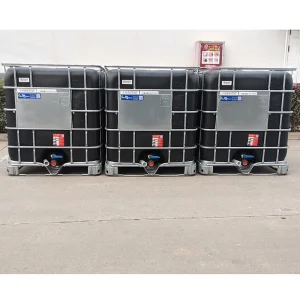
Direct maritime shipments originate from modern production units with compliant dangerous-goods and non-hazardous certification. Standard logistical containers include 190 kg tight-head steel drums, 950 kg IBC totes, and dedicated ISO tank containers purged with dry nitrogen (<20 ppm moisture) to safeguard hydroxyl and carboxyl reactivity throughout the shipping voyage to Jebel Ali Port or Port Khalid.
Connect with our senior polymer synthesis chemists to evaluate batch Certificates of Analysis (COA), gel-permeation chromatography (GPC) curves, and ASTM C836/D412 qualification samples.
Authoritative guidance regarding shipping protocols, shelf stability in hot climates, ASTM compliance, and chemical formulation specifics.
Discover our advanced line of amino-terminated elastomers, high-vinyl polybutadienes, grafted copolymers, and precision molecular weight PET polyethers engineered for global high-spec demands.