ISO 9001:2015 Technical Polymer Supply Chain

Liquid Rubber Manufacturers & Suppliers in Brazil

Direct engineering partnership and commercial supply of reactive telechelic polymers, functional liquid polybutadienes, and specialty elastomeric modifiers tailored for Brazil's mining, offshore pre-salt, automotive, and heavy industrial coatings.

Core Synthesis Portfolio

Specialty Reactive Liquid Rubber for Brazilian Formulators

Engineered functional homopolymers and copolymers designed as proactive impact modifiers, flexibilizers, and chemical crosslinkers for advanced epoxy, polyurethane, and phenolic systems operating under severe tropical stress.

Epoxy Modified Liquid Rubber Epoxidized Polybutadiene EPB Brazil
Brazil Maritime Coatings

China Epoxy Modified Liquid Rubber - Epoxidized Polybutadiene (EPB) for Brazil Heavy Duty Anti-Corrosion

Oxirane Oxygen:Customizable
Compatibilizer:Epoxy Matrix
Explore Product Details
HTBS Liquid Rubber Brazilian Formulations
Automotive & Tires

Liquid rubber-hydroxyl terminated butadiene-styrene random copolymer (HTBS) for Brazil Auto OEM

Terminal Group:-OH (Hydroxyl)
Backbone:Butadiene-Styrene
Explore Product Details
HTBN Liquid Rubber Suppliers Brazil
Pre-Salt Offshore Piping

Liquid Rubber-Hydroxyl Terminated butyronitrile Rubber (HTBN) for Brazil Subsea Adhesives

Acrylonitrile:Polar Resistant
Viscosity:Engineered
Explore Product Details
CTBN Liquid Rubber Manufacturers Brazil
Aerospace & Mining

Liquid Rubber - Carboxyl Terminated Nitrile Butadiene Rubber (CTBN) for Brazil Toughened Epoxies

Functionality:-COOH Dual-End
Fracture Energy:10x Toughening
Explore Product Details
Macro Industrial Context

Brazil's Liquid Rubber Demand: Sector Dynamics & Structural Realities

Brazil represents the most consolidated and technically sophisticated chemical consumer market in South America. However, domestic production limitations create critical supply-chain dependencies across core industrial hubs.

Mining Slurry & Conveyor Belts (Minas Gerais & Pará)

Brazil’s iron ore, bauxite, and gold processing corridors—led by global mining leaders—require ultra-durable elastomeric liners, slurry pipe internal claddings, and conveyor splicing adhesives. Standard cold-curing polyurethanes fail rapidly under high quartz abrasive slurries. Formulating with carboxyl and hydroxyl-functionalized liquid rubbers dramatically elevates dynamic tear resistance, dynamic cut-growth inhibition, and dampens repetitive aggregate impacts.

Offshore Pre-Salt & Petrochemical Corridors (Santos Basin)

Operating in deepwater pre-salt environments demands protective coatings and subsea pipeline insulation capable of resisting sour crude (H₂S, high CO₂), supercritical seawater pressures, and thermal fluctuations up to 150°C. Modified liquid nitrile elastomers (such as CTBN and ATBN) blended into Novolac and Bisphenol-A epoxies eliminate micro-cracking and interfacial delamination under violent subsea hydrothermal cycling.

Automotive OEM & Transport Engineering (São Paulo & Paraná)

The automotive manufacturing clusters in the ABC Paulista, Betim, and Curitiba are rapidly transitioning toward lightweight multi-material vehicle architectures (aluminum-to-composite structural bonding). Crash-resistant structural adhesives (CRAs) demand precise liquid butadiene modification to achieve high peel strength without compromising glass transition temperatures (Tg) or lap shear modulus under tropical climatic humidity.

82%
Brazil Import Ratio for Reactive Oligomers
+6.8%
Annual Demand Growth in Industrial Adhesives
4.5x
Fracture Toughness Boost via CTBN Modification
100%
Batch Traceability & REACH/GHS Compliance
Supply Chain Resilience

Direct Chinese Manufacturing Advantages for Brazilian Enterprises

Overcoming local import complexities, currency volatility (USD/BRL), and supply deficits through fully integrated chemical synthesis, precision quality control, and maritime dangerous-goods expertise.

Complete Monomer-to-Polymer Integration

Unlike European and North American re-packagers who face upstream 1,3-butadiene, acrylonitrile, and maleic anhydride supply bottlenecks, YANXA's manufacturing ecosystem controls raw material feedstock directly. This guarantees uncompromised batch stability, narrow polydispersity indices (PDI), zero cross-contamination, and continuous bulk supply insulation from global geopolitical disruption.

Full Analytical Rigor & Batch Reproducibility

Every shipment destined for ports such as Santos, Paranaguá, and Rio de Janeiro is governed by rigorous QA protocols. We provide detailed multi-angle light scattering GPC (Gel Permeation Chromatography), potentiometric titration of carboxyl/hydroxyl functional end-groups, FTIR spectral confirmation, and Karl Fischer moisture verification to ensure seamless integration into automated customer reactors.

Bespoke Logistics for South American Customs

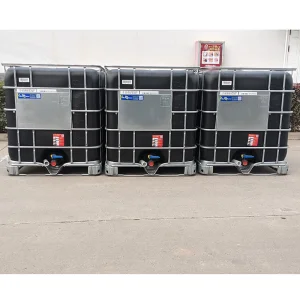
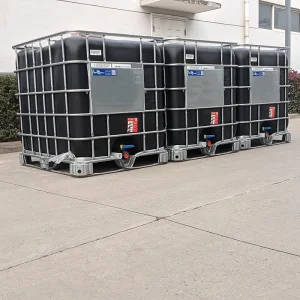
Brazilian customs clearance (Receita Federal / ANVISA / MAPA) requires immaculate commercial documentation. We supply bilingual English/Portuguese GHS-compliant Safety Data Sheets (FISPQ), Certificate of Analysis matching NCM/HS tariff codes, verified dangerous-goods declarations, and custom packaging ranging from 200L nitrogen-purged steel drums to 1000L IBCs and ISO Tanks.

Liquid Rubber Class Key Chemical Architecture Primary Industrial Utility in Brazil Formulation Synergy
CTBN Series Carboxyl-Terminated Butadiene-Acrylonitrile Automotive hem flange sealants, mining composite liners, heavy structural bonding In-situ pre-reaction with DGEBA/Novolac resins; triggers rubber-phase micro-domain precipitation.
EPB Series Epoxidized Polybutadiene Homopolymer Pre-salt pipeline inner linings, chemical resistance tank coatings, marine topsides Co-reacts directly with cycloaliphatic amines and amidoamines; retains ultra-low moisture permeability.
MLPB Series Maleic Anhydride Grafted Polybutadiene Thermoplastic vulcanizates (TPV), filled rubber compounding, wire & cable jacket insulation Superior coupling agent and interfacial compatibilizer between polar fillers (silica/clay) and non-polar polymers.
HTBN / HTBS Hydroxyl-Terminated Nitrile / Styrene Copolymers Cast polyurethane elastomers, ballistic composites, aerospace seals, solid propellants Direct polyaddition with aromatic and aliphatic diisocyanates (MDI/TDI/IPDI); excellent hydrolytic stability.
Future Horizons & Strategic Sourcing

Technological Trends & Procurement Directives

The South American polymer landscape is shifting toward solvent-free formulations, extended operational lifecycles under extreme heat and humidity, and total supply-chain ESG accountability.

Transition to 100% Solids Formulations

Driven by tightening environmental ordinances in Brazilian states like São Paulo (CETESB), industrial formulators are phasing out aromatic solvent-borne adhesives. Liquid rubbers serve as zero-VOC, 100% reactive diluents that reduce uncured formulation viscosity while chemically copolymerizing into the final network, bypassing VOC emission penalties.

Hygiene & Resistance to Tropical Biodegradation

Brazil’s equatorial humidity levels accelerate bacterial hydrolysis and fungal degradation of low-grade polymer plasticizers. Non-migratory liquid polybutadienes chemically anchor into the polymer matrix, eliminating plasticizer leaching, maintaining permanent flexibility in tropical water reservoirs, roofing membranes, and civil waterproofing installations.

Total Just-in-Time Contract Logistics

With maritime transit times from China to Brazil typically spanning 35 to 45 days, tier-1 industrial clients benefit from our programmed shipping schedules, annual safety buffer stock programs, and localized Brazilian bonded warehousing partnerships to eliminate line-stoppage risks.

Consult with our Technical Polymer Engineers for Brazil Delivery

Looking to validate a custom CTBN, HTPB, or modified polybutadiene grade? Request batch samples, tailored COAs, and competitive landed CFR pricing for Santos, Navegantes, or Suape ports.

Send Inquiry Now
Complete Technical Portfolio

Specialty Functional Resins, Telechelic Rubbers & Polyethers

Full specification list of high-grade liquid polymers ready for containerized ocean dispatch to Brazilian industrial converters and compounders.

ATBN Liquid Rubber Brazil Quotes
Fast-Cure Epoxy

China Liquid Rubber-Amino-terminated nitrile butadiene rubber (ATBN) for Brazil Fast-Setting Industrial Adhesives

Terminal Group:-NH2 Primary/Secondary
Thermal Shock:High Resistance
Explore Product Details
Vinyl Terminated Polybutadiene Brazil
High Dielectric Isolation

Liquid Rubber - Medium Vinyl Liquid Terminated Hydroxy Polybutadiene for Brazil Electrical Potting

Vinyl Content:Medium 1,2-Vinyl
Dielectric Loss:Ultra-Low
Explore Product Details
MLPB Maleic Anhydride Grafted Polybutadiene Brazil
Polymer Blends & TPO

Liquid Rubber - Maleic Anhydride Grafted Polybutadiene (MLPB) for Brazil Plastic Compounding

Grafting Level:Controlled Anhydride
Coupling Efficacy:High Interfacial Bond
Explore Product Details
LSBR Liquid Rubber Brazil Supplier
Tire Tread & Dynamics

China Liquid Styrene Butadiene Rubber (LSBR) for Brazil High Performance Tire Formulations

Polymer Microstructure:Adjustable Styrene
Wet-Grip Index:Enhanced
Explore Product Details
L-XNBR Liquid Carboxy Nitrile Brazil
Oilfield Mechanical Seals

China Liquid Rubber-Random Carboxy Nitrile Butadiene Rubber (L-XNBR) for Brazil Oil & Gas Gaskets

Functional Type:Distributed -COOH
Swelling Resistance:Aromatic Hydrocarbons
Explore Product Details
Low Molecular Weight PET Polyether Brazil
Polyurethane Systems

China Specialty Polyether-Low Molecular Weight PET Polyether for Brazil PU Foam & Elastomers

Molecular Weight:Low-Mw Narrow PDI
Terminal Assay:Controlled Hydroxyl
Explore Product Details
High Molecular Weight PET Polyether Brazil
Structural Flexible Precursors

Specialty Polyether-High Molecular Weight PET Polyether for Brazil High-Resilience Polymer Systems

Molecular Weight:High-Mw Chain
Tensile Elongation:Superior
Explore Product Details
Medium Molecular Weight PET Polyether Brazil
Elastomeric Sealants

China Specialty polyether - medium molecular weight PET polyether for Brazil Construction Adhesives

Molecular Weight:Medium Balanced
Compatibility:Broad Solvent Matrix
Explore Product Details
Technical Verification & Procurement FAQ

Frequently Asked Questions for Brazilian Importers

Clear, expert responses addressing chemical selection, regulatory compliance, logistical protocols, and application engineering.

What are the key technical differences between CTBN and ATBN in epoxy modification?
CTBN (Carboxyl-Terminated Butadiene-Acrylonitrile) requires an elevated temperature pre-reaction (adduct formation) with excess epoxy resins in the presence of a catalyst (such as triphenylphosphine) before amine curing. This forms distinct elastomeric nano-phases that undergo cavitation under stress, arresting crack propagation. ATBN (Amino-Terminated Butadiene-Acrylonitrile), on the other hand, contains primary/secondary amines that react spontaneously at ambient temperatures with oxirane rings. ATBN is chosen for room-temperature curing field adhesives, emergency mining conveyor repairs, and maritime protective linings where heat post-curing is impossible.
How do you support Brazilian customs compliance under ANVISA, IBAMA, and Receita Federal?
Every export consignment to Brazil is accompanied by verified documentation designed to eliminate clearing bottlenecks. This includes full GHS-compliant Safety Data Sheets in Brazilian Portuguese (ABNT-NBR 14725 standards), exact NCM (Nomenclatura Comum do Mercosul) tariff classification harmonization, Certificate of Origin, and complete chemical identification declarations needed for RADAR clearance and environmental checks through SISCOMEX.
Can YANXA customize the acrylonitrile (ACN) content and molecular weight of liquid nitrile rubbers?
Yes. ACN content dictates the solubility parameter and polar resistance of the liquid rubber. For applications requiring compatibility with standard bisphenol-A diglycidyl ethers, an ACN content around 17-18% is ideal. For extreme hydrocarbon fuel immersion, offshore crude piping, or solvent-resistant aerospace sealants, we synthesize custom grades with up to 26% ACN content, alongside calibrated number-average molecular weights (Mn from 3,000 to 4,500 g/mol) to maintain controllable pumping viscosities.
What maritime shipping containers and moisture-control standards are utilized for South American routes?
Because long equatorial transit can expose materials to elevated temperatures and moisture condensation, all reactive polymers are packaged in dry nitrogen-blanketed UN-certified heavy gauge steel drums (200 kg net) or composite IBCs (1000 kg net). Containers are fitted with high-absorption desiccant poles to eliminate moisture ingress, maintaining Karl Fischer water values below 0.05% w/w upon arrival at Brazilian discharge terminals.
Are evaluation samples provided for lab testing and plant trials in Brazil?
Yes, we routinely dispatch certified laboratory sample quantities (typically 500g to 2kg) accompanied by complete batch Certificate of Analysis via international air courier directly to Brazilian R&D facilities, resin formulators, and institutional university laboratories for mechanical, rheological, and environmental qualification.