

China Epoxy Modified Liquid Rubber - Epoxidized Polybutadiene (EPB) Manufacturer, Factories
Request Spec & Quote


Engineered for high adhesion, crosslinking density, and severe marine/subterranean chemical resistance across demanding environments like Baku Port and Absheron deep drilling.



The industrial ecosystem of Azerbaijan—anchored around the Caspian basin, the Sumgayit Chemical Industrial Park (SCIP), and trans-Eurasian transport corridors like the Baku-Tbilisi-Ceyhan (BTC) and South Caucasus Pipeline systems—presents strict operating conditions for elastomeric and protective coatings.
In offshore drilling facilities, hydrocarbon processing plants, and petrochemical refining complexes, standard single-coat sealants degrade rapidly under high salinity, sulfide stress cracking, and extreme ultraviolet radiation. Reactive liquid elastomers such as Carboxyl-Terminated (CTBN) and Hydroxyl-Terminated (HTBN) rubbers serve as high-performance flexibilizers, impact modifiers, and toughening agents in structural adhesives, epoxy matrix linings, and spray-applied elastomer membranes.
Industrial procurement in Baku, Ganja, and Sumgayit relies increasingly on the Trans-Caspian International Transport Route (TITR / Middle Corridor). With direct rail-to-sea freight routing connecting Western China manufacturing hubs through Aktau/Kuryk to the Port of Baku (Alat), delivery cycles for specialized polymers have dropped to 14–18 days.
By pairing high-volume Chinese synthesis reactors with compliant chemical intermodal shipping, petrochemical processors in Azerbaijan avoid the cost overheads and volatile spot pricing typical of fragmented European distributor networks.
Comparative matrix for process engineers, formulation scientists, and supply-chain managers evaluating functional liquid polymers.
Carboxyl (-COOH), Hydroxyl (-OH), and Amine (-NH2) end-groups enable direct covalent bonding into epoxy resins, polyurethanes, and polyureas. This eliminates plasticizer migration, preserving elongation at break even after thousands of hours of high-pressure brine immersion.
Offshore infrastructure in the Shah Deniz basin faces heavy cathodic disbondment. Adding carboxyl-modified or epoxidized liquid rubber creates a dense, non-polar barrier matrix that reduces water vapor transmission to lower corrosion rates under insulation (CUI).
With glass transition temperatures (Tg) extending down to -50°C, liquid butadiene-nitrile copolymers prevent microcracking along structural joints, transit tunnels, and surface reservoirs subjected to sharp seasonal shifts across the Absheron Peninsula.
| Polymer Class | Functional Backbone | Viscosity (25°C, mPa·s) | Primary Industrial Use in Azerbaijan | Compatibility Profile |
|---|---|---|---|---|
| EPB (Epoxidized Polybutadiene) | Epoxy-functional diene | 4,000 – 12,000 | Offshore anti-corrosive primer, electrical potting | Bisphenol-A epoxy, anhydrides, amines |
| CTBN (Carboxyl-Terminated) | Butadiene-acrylonitrile | 20,000 – 160,000 | Structural aerospace/defense adhesives, pipeline wrap | Epoxies, vinyl esters, phenolic systems |
| HTPB / HTBS (Hydroxyl-Terminated) | Butadiene-styrene copolymer | 3,000 – 8,000 | Polyurethane elastomer casting, elastomeric membranes | MDI/TDI isocyanates, chain extenders |
| ATBN (Amine-Terminated) | Butadiene-acrylonitrile | 30,000 – 200,000 | Fast-cure bridge deck sealants, marine crash-resistant adhesives | Direct addition to polyamine epoxy curatives |
How high-throughput continuous polymer synthesis and rigorous ISO/GHS compliance provide stability to industrial buyers across Azerbaijan and Central Asia.
Our manufacturing network utilizes continuous tubular reactors alongside distributed control systems (DCS). This setup holds molecular weight distribution (Mw/Mn polydispersity index < 1.8) within tightly controlled limits. Every batch undergoes gel permeation chromatography (GPC), Fourier-transform infrared spectroscopy (FTIR), and non-aqueous potentiometric end-group titration to guarantee consistent curing kinetics on production lines.
By moving beyond legacy batch kettles, our automated production lines cut cross-batch property variations to under 1.5%. This allows manufacturers to run formulations without frequent recipe adjustments.
All liquid rubber shipments are delivered under standard UN-certified steel drums (200 L) or dedicated intermediate bulk containers (IBC 1,000 L), supported by full GHS-compliant multilingual Safety Data Sheets (SDS), technical data sheets (TDS), and analytical Certificates of Analysis (COA).
With clear customs handling and direct CIF Baku or DAP Sumgayit freight terms via the Middle Corridor, Azerbaijani buyers avoid port storage delays, hazardous material misclassification, and distributor markups.
Speak directly with our technical sales engineers. Receive a complete factory-direct pricelist, technical data sheets, and custom synthesis parameters within 24 hours.
Proven implementations of liquid synthetic rubbers in structural, marine, and energy assets across the region.
Heavy wave action, salty coastal air, and mechanical abrasion erode standard protective coatings on harbor sheet piles. Formulators use our EPB and CTBN as reactive flexibilizers in solvent-free epoxy mastic coatings, improving impact resistance and adhesion on blast-cleaned steel.
Field-applied pipeline joint coatings require rapid cure profiles and cold-temperature flexibility during winter pipe laying. HTBN modified polyurethanes provide elongation up to 450% without plasticizer exudation, helping prevent stress cracks along underground steel transitions.
Secondary chemical containment dikes for sulfuric acid, caustic soda, and refined hydrocarbons need chemically resistant membranes. Blending L-XNBR into industrial polyurea coatings yields resilient barrier films that resist chemical attack and heavy industrial vehicle traffic.
Full factory portfolio of liquid elastomers, functional rubbers, and specialty polyether polymers for high-performance industrial formulations.


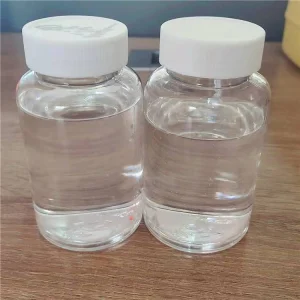


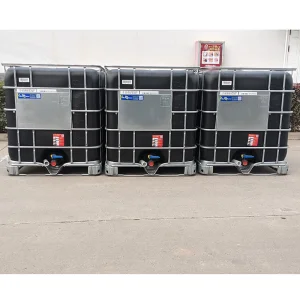


Detailed technical answers for chemical formulators, logistics directors, and procurement managers in Azerbaijan and Central Asia.
Unmodified epoxy resins, while chemically resistant and mechanically rigid, tend to be brittle and vulnerable to crack propagation under cyclic thermal shock. When reacted into the matrix, Carboxyl-Terminated (CTBN) or Amine-Terminated (ATBN) Nitrile Butadiene rubbers phase-separate into elastomeric micro-domains (typically 1–5 microns across). These domains act as energy absorbers that arrest cracks, increasing fracture toughness (K1c) up to 300% without hurting the heat distortion temperature (HDT).
Our standard production MOQ starts at 1,000 kg (equivalent to five 200 L drums or one IBC tote). For specialized copolymers like Maleic Anhydride Grafted Polybutadiene (MLPB), trial sample quantities (25 kg pails) are available for laboratory validation. Transit times from our main production hub to Baku (Alat Port) average 14–18 days via direct rail-sea container transit along the Middle Corridor.
Every lot is provided with an audited Certificate of Analysis (COA) containing direct titration figures for end-group functionality (acid value, hydroxyl number, or epoxy equivalent weight), Brookfield rotational viscosity (25°C), moisture levels via Karl Fischer titration, and GPC molecular weight distribution. We also supply GHS-compliant 16-section Safety Data Sheets (SDS) and technical processing sheets.
Yes. Our automated continuous synthesis units can be set to achieve specific molecular weights and end-group equivalents (e.g., custom carboxyl content from 1.2% to 2.8% for CTBN). Adjusting these parameters lets formulators balance room-temperature handling viscosity with the required target crosslink density.
Contact our chemical engineers to review technical specifications, request validation samples, and receive volume-tiered FOB/CIF quotes tailored to your operation.