


Procurement-grade synthetic polymers, specialty gases, fine nitrates, and high-performance metallic alloys manufactured to stringent DIN/ASTM standards.





An authoritative analysis of China's primary smelting supremacy, inert gas atomization capacities, and evolving global procurement dynamics.
Magnesium (Mg), possessing a density of merely 1.738 g/cm³, stands as the lightest structural metal commercially deployed in modern engineering, roughly two-thirds the density of aluminum and one-fourth that of structural titanium or steel. While mechanical milling historically yielded irregular, jagged magnesium granules predominantly restricted to pyrotechnics, steel desulfurization, and coarse metallurgical scavenging, the commercial evolution of Inert Gas Atomization (IGA) has revolutionized the advanced material ecosystem.
Today, China commands an estimated 85% to 90% of global primary magnesium ingot production, primarily clustered within the dolomite-rich basins of Shaanxi and Shanxi provinces. Over the past decade, Chinese processing enterprises have transitioned aggressively up the value chain from basic Pidgeon-process extraction to vertically integrated, closed-loop inert gas atomization towers. This vertical positioning grants Chinese suppliers an unmatched raw-material cost advantage, continuous melt-furnace feedstock access, and multi-thousand-ton annual capacities that insulate international buyers from supply-chain disruptions.
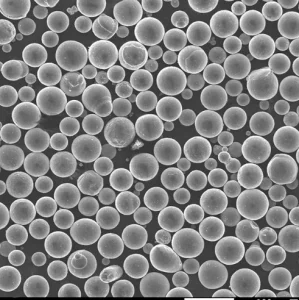
The transition from ground magnesium to spherical atomized magnesium alloy powder represents an order-of-magnitude leap in physical and rheological consistency. Under closed-chamber argon (or helium-blended) supersonic gas atomization, molten magnesium alloy streams are sheared into microscopic droplets under controlled dynamic gas pressures ranging between 2.5 MPa and 6.0 MPa. As the molten droplets cool in freefall through high-purity argon counter-currents at cooling rates exceeding 103 to 105 K/s, surface tension induces near-perfect sphericity.
This rapid solidification suppresses secondary dendritic arm spacing (SDAS), eliminates macro-segregation of alloying elements (such as Zinc, Zirconium, Aluminum, and Rare Earth elements like Neodymium, Yttrium, and Gadolinium), and yields an exceptionally smooth outer passivation boundary. Consequently, atomized spherical powders exhibit Hall Flow rates under 25 seconds per 50 grams, tap densities exceeding 60% of theoretical solid density, and predictable packing densities critical for precision layer recoating in laser powder bed fusion (LPBF/SLM) systems.
Standard and custom-engineered ternary and quaternary magnesium systems certified via Malvern laser diffraction and ICP-OES elemental analysis.
| Alloy Classification | Nominal Composition (% wt) | Standard PSD Cuts (μm) | Apparent Density (g/cm³) | Target Applications |
|---|---|---|---|---|
| Al-Mg 50:50 / 60:40 | Al: 48.0–52.0, Mg: Bal, Fe < 0.05 | 0–45, 45–106, 106–250 | 0.85 – 1.05 | Pyrotechnic ignition, chemical synthesis, propellant additives |
| AZ91D / AZ80 | Al: 8.5–9.5, Zn: 0.45–0.90, Mn: 0.17–0.40, Mg: Bal | 15–53, 45–105 | 1.02 – 1.15 | Automotive subframes, drone structural ribs, DED additive repair |
| WE43 (High Temp / Bio) | Y: 3.7–4.3, Nd: 2.0–2.5, Heavy RE: 0.4–1.0, Zr: 0.4–1.0, Mg: Bal | 15–45, 20–63 | 1.10 – 1.22 | Aerospace propulsion housings, bioabsorbable orthopedic implants |
| ZK60 / ZK61 | Zn: 5.5–6.5, Zr: 0.45–0.90, Mg: Bal | 15–53, 53–150 | 1.05 – 1.18 | High-impact shock absorbers, sporting gear, bicycle wheel components |
| Pure Mg (99.8% - 99.95%) | Mg: ≥ 99.85, Fe < 0.04, Si < 0.03, Cl < 0.005 | 20–75, 45–150, 150–300 | 0.90 – 1.02 | Hydrogen storage matrices, titanium sponge refining, Grignard reagents |
Utilizing high-precision multi-stage ultrasonic and mechanical air-classification towers under inert argon atmospheres, d10, d50, and d90 spans are tightly maintained. Sieve analysis complies fully with ASTM B214 and laser diffraction complies with ISO 13320.
Uncontrolled oxidation degrades powder weldability and triggers explosion hazards. Our controlled micro-passivation process introduces trace sub-percent oxygen dosing to create a uniform, non-pyrophoric MgO skin (< 5 nm) that prevents auto-ignition while maintaining full laser absorbability.
Near-unity circularity (≥ 0.92 sphericity index) with minimal satellite attachment guarantees low inter-particle friction. Provides excellent Hausner ratios (< 1.18) and Carr's Compressibility Index (< 15%), ensuring zero recoater blade jams in high-speed 3D printing beds.
Five overarching industrial revolutions accelerating the global consumption of atomized spherical magnesium alloys through 2035.
Every 10% mass reduction in an electric passenger vehicle yields a 6%–8% enhancement in driving range. Automotive Tier-1 suppliers are migrating from die-cast subframes to metal binder jetting and powder-bed fusion of complex, lattice-cored magnesium components that consolidate up to 15 stamped sheet parts into a single monolith.
Magnesium hydride (MgH2) achieves the highest theoretical reversible hydrogen storage density of any metallic matrix at 7.6 wt% H2. Atomized ultra-fine spherical powders doped with catalytic nickel or titanium nanoparticles drastically lower the desorption temperature below 280°C, unlocking commercial stationary and micro-grid energy storage.
Permanent titanium plates and steel screws inflict stress shielding and require hazardous secondary extraction surgeries. WE43 and Mg-Ca-Zn spherical powders enable patient-matched additive printing of porous cranial meshes and trauma screws that degrade safely in vivo, matching human bone cortical modulus (40–45 GPa).
Cold spray additive manufacturing (CSAM) relies on solid-state supersonic plastic deformation without melt-phase thermal distortion. Fine spherical magnesium powder permits immediate localized dimensional repair of multimillion-dollar helicopter gearbox casings and naval aircraft components without micro-cracking.
In aerospace flares, rocket booster igniters, and thermite cutting systems, Al-Mg 50:50 and pure atomized powders yield high burn-rate propagation, maximum combustion temperatures (> 3,000°C), and low ignition energy thresholds compared to mechanical turnings, with zero clumping.
How China's leading metallurgical facilities are integrating AI vision sorting, closed-loop argon reclaiming, and novel nano-composite alloy synthesis.
Traditional open-vent atomization wastes extensive volumes of carrier gas. The rollout of automated closed-loop cryogenic argon recovery towers has cut processing energy costs by 32%, simultaneously reducing powder oxygen pick-up to below 200 ppm across production campaigns.
By pre-dispersing functionalized multi-walled carbon nanotubes (MWCNTs) and silicon carbide (SiC) nano-whiskers directly into the liquid Mg induction melt prior to atomization, next-generation powders will achieve yield strengths exceeding 420 MPa—competing directly with titanium Grade 5 at half the weight.
Migration from coal-gas-fired vertical retort reduction furnaces toward renewable-powered molten salt electrolysis (bypassing the Pidgeon process) aims to reduce the embedded carbon footprint of primary Chinese magnesium ingots by over 65%, complying fully with the EU Carbon Border Adjustment Mechanism (CBAM).
Demystifying FOB, CIF, and DDP price quotations for international purchasing managers and R&D directors.
Receiving quotes from Chinese atomized magnesium powder manufacturers requires an understanding of the four primary cost components that dictate baseline pricing per metric ton (MT) or kilogram (kg):
Indexed dynamically against the Shanghai Metals Market (SMM) or SunSirs 99.9% magnesium ingot benchmark. Fluctuations in ferrosilicon reducer costs and environmental furnace quotas directly reflect in base molten-metal pricing.
Encompasses vacuum induction melting (VIM) electrical expenditure, ultra-high-purity argon gas consumption, and atomization yield. Finer distributions (e.g. 15–45 μm) involve higher yield losses during classification, commanding a 25%–40% premium.
While simple binary Al-Mg 50:50 formulas add standard processing overhead, aerospace and biomedical formulations incorporating costly rare earths (Neodymium, Yttrium, Zirconium in WE43 or Lithium in Mg-Li) scale dramatically with raw element spot markets.
Classified under UN 1418 / UN 3178 (Class 4.3, Dangerous When Wet). Mandatory hermetic steel drums with inner nitrogen-purged vacuum foil liners, UN packaging certification, and IMO marine safety surcharges represent an unavoidable logistics element.
Full batch traceability from ingot batching through final destination clearance by Yanxatech System Industries Limited (YANXA).
Every consignment is accompanied by a dedicated Certificate of Analysis (COA) confirming ICP-OES elemental assay, LECO interstitial oxygen/nitrogen content, Malvern Mastersizer PSD curves, and Scott Volumeter tap density. Technical Data Sheets (TDS) and multilingual GHS-compliant Safety Data Sheets (SDS) are provided upfront.
Handling combustible and water-reactive metallic powders demands strict adherence to the International Maritime Dangerous Goods (IMDG) Code and IATA-DGR rules. We supply UN-certified steel drums (typically 25 kg, 50 kg, or 100 kg net) equipped with desiccant packs, inert argon/nitrogen backfills, and tamper-evident hermetic ring clamps.
Founded in 2008, Yanxatech System Industries Limited (YANXA) has established multi-decade export channels across Europe, North America, Southeast Asia, and the Middle East. Operating with an audited ISO 9001:2015 management system, our material specialists eliminate regulatory risks at major destination ports.
Clear, authoritative insights addressing powder performance, safety standards, order economics, and import procedures.
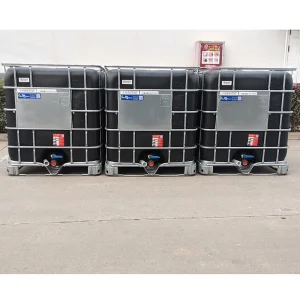
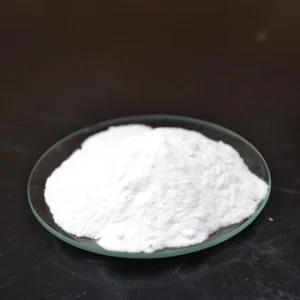
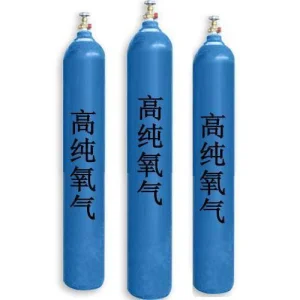
Explore additional industrial materials supplied with batch-specific analytical certification and compliant hazardous cargo logistics.

Connect directly with Yanxatech System Industries Limited (YANXA) application metallurgists. Obtain custom sieve analysis, chemical assays, batch COA documentation, and firm CFR/CIF maritime freight pricing.