


Engineered raw materials, specialized rubbers, and advanced metallurgy powders rigorously validated under batch-level ISO 9001 and COA certification protocols.
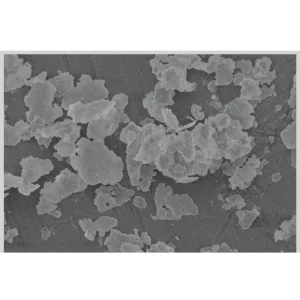
Wholesale Flake Zn-AI Alloy Powder Supplier, Suppliers
Wholesale Flake Zn-AI Alloy Powder Supplier, Suppliers
China Liquid Styrene Butadiene Rubber (LSBR) Manufacturers, Pricelist
China Liquid Styrene Butadiene Rubber (LSBR) Manufacturers, Pricelist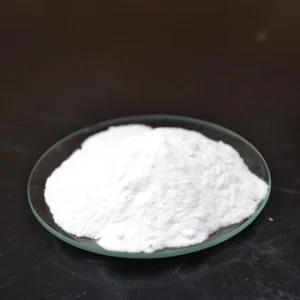
Wholesale Lithium Nitrate Manufacturer, Manufacturers
Wholesale Lithium Nitrate Manufacturer, Manufacturers
China Liquid Rubber-Amino-terminated nitrile butadiene rubber (ATBN) Manufacturer, Quotes
China Liquid Rubber-Amino-terminated nitrile butadiene rubber (ATBN) Manufacturer, Quotes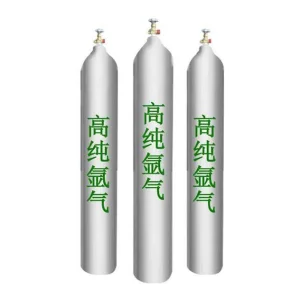
Wholesale High purity argon (Ar) Manufacturers, Pricelist
Wholesale High purity argon (Ar) Manufacturers, Pricelist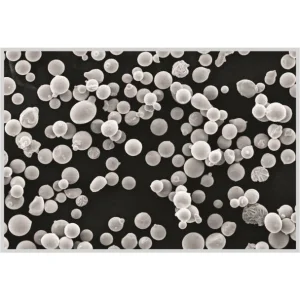
Wholesale Atomized Spheroid Al-Based Alloy Powder Manufacturers, Suppliers
Wholesale Atomized Spheroid Al-Based Alloy Powder Manufacturers, Suppliers
Wholesale Liquid Rubber-Hydroxyl Terminated butyronitrile Rubber (HTBN) Supplier, Factories
Wholesale Liquid Rubber-Hydroxyl Terminated butyronitrile Rubber (HTBN) Supplier, Factories
China Liquid Rubber-Random Carboxy Nitrile Butadiene Rubber (L-XNBR) Supplier, Quotes
China Liquid Rubber-Random Carboxy Nitrile Butadiene Rubber (L-XNBR) Supplier, QuotesDeciphering the molecular precision, crystallographic behavior, and foundational chemistry of Ammonium Oxalate Monohydrate across modern industrial value chains.
Ammonium Oxalate Monohydrate, registered under CAS No. 6009-70-7 (EC Number: 214-202-3; Linear Formula: (NH₄)₂C₂O₄·H₂O; Molecular Weight: 142.11 g/mol), represents one of the most critical dicarboxylic acid diammonium salts utilized across the metallurgical, analytical, surface finishing, and advanced chemical synthesis sectors. Structurally, the compound exists as colorless, rhombic or orthorhombic prismatic crystals that demonstrate extraordinary selectivity in chelating polyvalent metal cations, particularly calcium (Ca²⁺), magnesium (Mg²⁺), lead (Pb²⁺), and trivalent rare-earth elements (REEs).
In the contemporary industrial supply ecosystem, sourcing CAS No. 6009-70-7 has transitioned from basic commodity procurement to high-specification technical qualification. Global tier-1 purchasers across North America, the European Union, Japan, and the Asia-Pacific region demand rigorous batch-to-batch repeatability. The substance serves not only as an essential precipitation agent for high-purity rare-earth separation but also as a fundamental reagent in clinical diagnostic kits, a rust inhibitor and surface passivation activator for aerospace alloys, and a functional combustion stabilizer in specialized energetic matrices.
Analyzing cross-continental consumption patterns, regulatory shifts under REACH and TSCA, and strategic supply realignment.
The global race toward green electrification and permanent magnet production (NdFeB) has spurred double-digit consumption growth for high-purity ammonium oxalate as a primary selective precipitant for neodymium, praseodymium, and dysprosium recovery.
International environmental frameworks, including EU REACH, US TSCA, and RoHS/GHS directives, require suppliers to exhibit complete toxicological dossiers, zero detectable phthalate or volatile organic carriers, and auditable sustainability profiles.
Global procurement teams have moved decisively from spot-market ordering toward structured volume contracts with tier-1 Chinese manufacturers capable of guaranteeing dual-site synthesis, buffered raw material reserves, and multimodal transport options.
Inside the state-of-the-art DCS automation, low-carbon synthesis, and strict analytical regimes transforming Chinese chemical infrastructure.
The manufacturing architecture for CAS No. 6009-70-7 in China has undergone an unprecedented technological upgrade over the past decade. Traditional batch-boiling kettles have been comprehensively replaced by continuous, computer-controlled (DCS) neutralization and multi-stage vacuum crystallization units. By reacting high-purity synthetic oxalic acid (H₂C₂O₄·2H₂O) with electronic-grade aqueous ammonia (NH₄OH) under precisely modulated temperature (65°C to 72°C) and pH conditions, Chinese automated plants eliminate localized supersaturation, delivering crystals with narrow particle size distribution (PSD) and extraordinary purity.
Real-time turbidimetric sensors and thermodynamic process automation govern mother-liquor cooling gradients, achieving perfect stoichiometric crystallization with crystalline moisture held precisely at the theoretical monohydrate target of 12.67% ± 0.3%.
Advanced chelating resin towers and ultrafiltration membranes strip divalent transition metal cations (Fe, Ni, Cu, Pb) down to sub-ppm levels, ensuring seamless compliance with analytical AR, ACS, and electronic-reagent grade standards.
Integrated palletizing, nitrogen-purged moisture-barrier containment, and direct logistical pipelines to major deep-water ports (Ningbo-Zhoushan, Shanghai, Qingdao) ensure stable delivery without caking, degradation, or hydroscopic breakdown during ocean transit.
Furthermore, China's centralized chemical industrial parks benefit from vertical supply chain integration. The direct pipeline delivery of raw synthesis inputs (such as ammonia from synthesis loops and carbon monoxide-derived oxalic acid) shields Chinese factories from the acute raw material price shocks that frequently disrupt North American and European secondary compounders.
Comprehensive comparative parameter audit across Industrial, Analytical Reagent (AR), and High-Purity Electronic grades.
| Analytical Parameter | Industrial Technical Grade | Analytical Reagent (AR / ACS) | Electronic / Ultra-Pure Grade | Standard Test Methodology |
|---|---|---|---|---|
| Assay [(NH₄)₂C₂O₄·H₂O] | ≥ 99.0% | ≥ 99.5% – 99.8% | ≥ 99.95% | Redox Titration (KMnO₄ Standard) |
| Appearance / Crystal Form | White crystalline powder | Colorless transparent prisms | Optical-grade prism crystals | Visual & Optical Microscopy |
| Residue After Ignition (as SO₄) | ≤ 0.05% | ≤ 0.02% | ≤ 0.005% | Gravimetric Muffle Furnace (800°C) |
| Chloride (Cl⁻) | ≤ 0.005% (50 ppm) | ≤ 0.002% (20 ppm) | ≤ 0.0005% (5 ppm) | Ion Chromatography / Turbidimetry |
| Sulfate (SO₄²⁻) | ≤ 0.01% (100 ppm) | ≤ 0.005% (50 ppm) | ≤ 0.001% (10 ppm) | BaCl₂ Turbidimetric Spectrometry |
| Iron (Fe) | ≤ 0.002% (20 ppm) | ≤ 0.0005% (5 ppm) | ≤ 0.0001% (1 ppm) | ICP-OES / Orthophenanthroline |
| Heavy Metals (as Pb) | ≤ 0.002% (20 ppm) | ≤ 0.0005% (5 ppm) | ≤ 0.0002% (2 ppm) | ICP-MS Spectrometry |
| pH Value (5% Aqueous Sol., 25°C) | 6.0 – 7.0 | 6.3 – 6.7 | 6.4 – 6.6 | Calibrated Digital Glass Electrode |
| Insoluble Matter in H₂O | ≤ 0.02% | ≤ 0.005% | ≤ 0.001% | Gravimetric Filtration (0.45 μm) |
How CAS No. 6009-70-7 functions as a key component across high-performance chemical, metallurgical, and electronic operations.
Ammonium Oxalate Monohydrate acts as an elite precipitation agent for rare-earth elements like lanthanum, cerium, and neodymium. It yields crystalline oxalates with high filterability, which calcine smoothly to high-purity rare-earth oxides without leaving metal residues.
Used widely as an essential standard reagent for determining calcium, magnesium, and lead in biological, environmental, and mineral samples. Its stoichiometric reaction creates insoluble calcium oxalate monohydrate, enabling accurate gravimetric and titrimetric assays.
In aerospace and automotive manufacturing, ammonium oxalate solutions are key in metal finishing baths. They strip oxidized scale, chelate iron ions, and create micro-thin oxalate conversion coatings that optimize primer adhesion and inhibit galvanic corrosion.
Serves as a specialized mordant and stripping agent in precision textile dyeing, particularly for woolens and fine synthetics. It neutralizes alkali residues, buffers bath pH, and stabilizes color yield without fiber degradation.
Ammonium oxalate functions as an active combustion velocity modifier, flame-cooling agent, and burn-rate stabilizer in specialized pyrotechnic mixtures, solid propellants, and industrial safety explosives, thanks to its clean endothermic decomposition path.
Functions as a precise ammonium and oxalate donor in the synthesis of organic oxalate esters, specialty catalysts, pharmaceutical intermediates, and coordinated transition-metal complex lattices.
A technical export partner supplying certified specialty materials, metal powders, gases, and fine chemicals to global industry.
Founded in 2008, Yanxatech System Industries Limited (YANXA) has evolved from an engineering-focused trading group into a trusted global supply partner for advanced industrial chemicals, nitrates, liquid rubbers, and gas-atomized alloy powders. We engineer our operations around technical compliance, auditable quality, and transparent logistics.
We serve industrial buyers through six specialized product families: Chemical Additives, Specialty Gases (with purities reaching 5N, 5.5N, and 6N for electronic-grade CF₄, SF₆, Krypton, Neon, and Xenon), Inorganic Salts, Liquid Rubbers (including specialized HTBN, ATBN, and LSBR), Metal & Alloy Powders, and Nitrates. Every commercial lot undergoes full testing prior to dispatch, shipping with lot-traceable Certificates of Analysis (COA), GHS-compliant Safety Data Sheets (SDS), and comprehensive Technical Data Sheets (TDS).
We align production batches directly to your technical data sheet—including particle size distribution (PSD), assay limits, crystal habit, and trace impurities—eliminating guesswork in sensitive production lines.
Our operations follow ISO 9001 quality management standards. Independent third-party lot testing (SGS, Bureau Veritas, Intertek) is available upon request for high-security applications.
Experienced in shipping regulated oxidizers, flammable metal powders, and compressed gases under full IMDG and IATA dangerous-goods frameworks, backed by certified UN packaging.
In-depth technical answers addressing quality assurance, chemical handling, and regulatory compliance for international procurement teams.
CAS No. 6009-70-7 designates the stable monohydrate form of ammonium oxalate [(NH₄)₂C₂O₄·H₂O; MW 142.11 g/mol], which contains 12.67% stoichiometric crystal water. In contrast, CAS No. 1113-38-8 refers specifically to anhydrous ammonium oxalate [(NH₄)₂C₂O₄; MW 124.10 g/mol]. Commercial production, analytical standards, and international bulk shipments almost exclusively involve the monohydrate (6009-70-7) due to its high crystalline stability and resistance to spontaneous ambient hydration.
Ammonium oxalate serves as an exceptional selective chelating and precipitation agent for trivalent lanthanide series cations (Ln³⁺). When introduced into moderately acidic rare-earth chloride or nitrate leachate solutions, it forms crystalline rare-earth oxalate hydrates [Ln₂(C₂O₄)₃·xH₂O] with very low solubility products (Ksp ~ 10⁻²⁶ to 10⁻²⁹). This enables quantitative separation from transition metals (Fe, Al, Zn) that remain soluble, producing precursors that calcine directly into high-purity rare-earth oxides.
Upon controlled heating, ammonium oxalate monohydrate first loses its crystalline water between 70°C and 115°C. Continued thermal ramp above 150°C triggers dissociation into gaseous ammonia (NH₃), carbon monoxide (CO), carbon dioxide (CO₂), and water vapor (H₂O). Because it decomposes without generating metallic oxide slag, it serves as an ideal fugitive template and burn-out additive in advanced technical ceramics, catalyst carrier preparation, and sintered metallurgy.
Ammonium oxalate monohydrate is regulated under toxic substance conventions due to its soluble oxalate content. For international maritime transit (IMDG) and air shipment (IATA), it is typically classified as UN 2811, Toxic Solid, Organic, N.O.S. (Ammonium Oxalate), Class 6.1, Packing Group III. High-volume industrial exports require compliant UN-rated packaging (5M2 paper-poly composite or 1H2 drum configurations), hazard labeling, and full dangerous-goods declarations (DGD).
Every industrial delivery is accompanied by an authenticated, lot-specific batch Certificate of Analysis (COA) detailing the assay, heavy metal trace assays (ICP-OES/ICP-MS), chloride, sulfate, and pH data. Shipments also include fully compliant 16-section Safety Data Sheets (SDS) in accordance with UN GHS Revision 8/9, a Technical Data Sheet (TDS), a packing declaration, and a verified Certificate of Origin (CO). Third-party inspections via SGS or Bureau Veritas can be organized prior to port loading.
Caking in ammonium oxalate stems primarily from fine crystal dust and residual mother-liquor moisture. Chinese Factory 4.0 installations resolve this by deploying continuous crystallization loops that yield uniform prismatic crystals free of irregular micro-fines. After centrifugation, multi-stage fluidized-bed dryers lower free surface moisture to <0.05% without stripping crystal hydrate water. Packaged in heat-sealed PE inner liners with desiccant protection, the product remains free-flowing over long ocean transits.
Ultra-pure noble gases, specialized synthetic polymers, and precision industrial inorganic compounds manufactured to strict global standards.
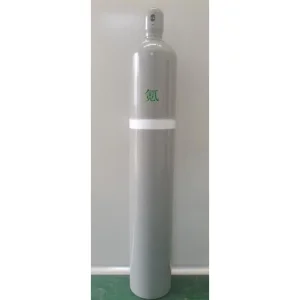
China High-purity krypton & Ultrapure krypton (Kr: 5N, 5.5N, 6N) Manufacturer, Manufacturers
China High-purity krypton & Ultrapure krypton (Kr: 5N, 5.5N, 6N) Manufacturer, Manufacturers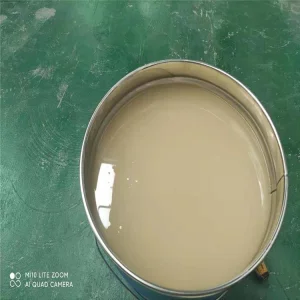
China Specialty polyether - medium molecular weight PET polyether Supplier, Suppliers
China Specialty polyether - medium molecular weight PET polyether Supplier, Suppliers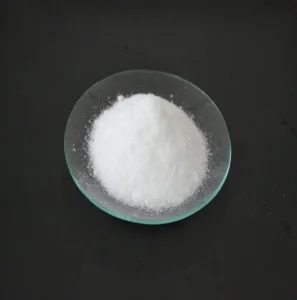
China Barium Acetate Supplier, Factories
China Barium Acetate Supplier, Factories
China Carbon Tetrafluoride Factory, Pricelist
China Carbon Tetrafluoride Factory, Pricelist
Wholesale High purity xenon & Ultra-pure xenon (Xe: 5N, 5.5N, 6N) Supplier, Suppliers
Wholesale High purity xenon & Ultra-pure xenon (Xe: 5N, 5.5N, 6N) Supplier, Suppliers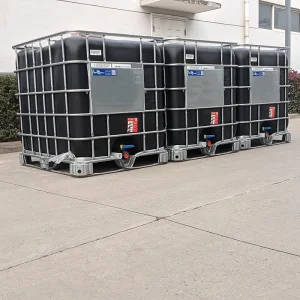
Wholesale Specialty Polyether-High Molecular Weight PET Polyether Pricelist, Quotes
Wholesale Specialty Polyether-High Molecular Weight PET Polyether Pricelist, Quotes
Wholesale Pure oxygen,High purity oxygen,Ultra-pure oxygen (O2) Supplier, Pricelist
Wholesale Pure oxygen,High purity oxygen,Ultra-pure oxygen (O2) Supplier, Pricelist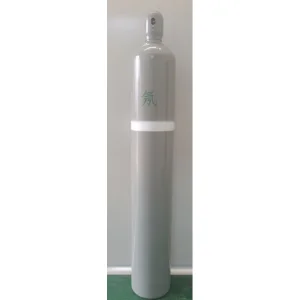
China Pure neon & High purity neon (Ne: 5N, 5.5N, 6N) Supplier, Suppliers
China Pure neon & High purity neon (Ne: 5N, 5.5N, 6N) Supplier, SuppliersA systematic framework for procurement officers and R&D directors qualifying Chinese manufacturing partners.
Order a 500g trial sample with a complete lot COA. Cross-verify trace cations using ICP-OES and run laser diffraction to evaluate PSD and solubility curves for your target process.
Examine the supplier's ISO 9001 and ISO 14001 certifications. Confirm DCS automation, mother-liquor handling, and safety measures for raw synthetic ammonia and oxalic acid storage.
Verify that UN-certified packaging and certified Class 6.1 maritime paperwork match destination-port import requirements, preventing customs holds or handling delays.
Lock in annual raw material indexing, quarterly inventory buffer requirements, and split-port logistics contingencies to maintain steady factory supply year-round.
