


Explore YANXA's specification-engineered chemical derivatives, high-grade specialty polyethers, and ultra-high purity semiconductor process materials manufactured to rigorous international standards.







Decoupling structural functionality, oligomerization control, and chemical specifications for demanding global supply chains.
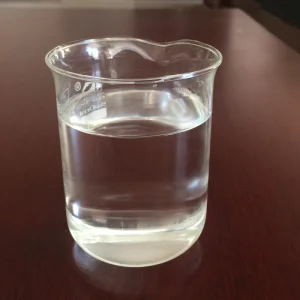
Polyethylene Glycol 10 (PEG-10), structurally defined as H(OCH₂CH₂)₁₀OH or α,ω-dihydroxypoly(oxy-1,2-ethanediyl) with a nominal polymerization degree (n) averaging 10 repeating units, represents a pivotal segment within the low-molecular-weight polyether diol family. With a theoretical mean molecular weight hovering around 458 to 500 Da, PEG-10 occupies an indispensable rheological, hydrophilic, and solubilizing sweet spot. Unlike higher molecular weight polymers (such as PEG-4000 or PEG-6000) that solidify into crystalline flakes, Peg-10 exists at ambient conditions as a limpid, non-volatile, hygroscopic viscous liquid featuring complete miscibility in water, lower aliphatic alcohols, glycols, and polar organic solvents.
In modern chemical engineering and specialty ethoxylation manufacturing in China, the industrial synthesis of high-purity PEG-10 is governed by the precision catalytic addition of ethylene oxide (EO) to ethylene glycol or diethylene glycol initiators. Achieving a tight Poisson distribution of the polyoxyethylene chain requires sophisticated narrow-range ethoxylation (NRE) catalyst systems, notably alkaline earth metal salts or modified basic coordination complexes, operating in state-of-the-art loop reactors. This technological mastery minimizes undesirable side products such as cyclical crown ethers, polyglycol dimers, and residual volatile dioxane impurities.
As international regulations—including EU REACH, the US FDA Cosmetic Ingredient Review (CIR), and Pharmacopoeia harmonization standards (USP-NF, Ph. Eur., ChP)—institute increasingly stringent thresholds for unreacted monomers and oxidative byproducts, Chinese factories have upgraded downstream purification systems. Multi-stage falling-film molecular distillation, closed-loop vacuum stripping, and inert nitrogen-purged preservation ensure that commercial PEG-10 batches exhibit ultra-low residual ethylene oxide (< 1 ppm), reduced 1,4-dioxane (< 5 ppm), and negligible aldehyde contents.
Yanxatech System Industries Limited (YANXA), drawing upon decades of chemical additive synthesis and advanced functional polyether production since 2008, executes rigorous quality control architectures across every stage of synthesis. Our production lines couple automated continuous dosing algorithms with offline GC-MS, HPLC, and Karl Fischer titrations, guaranteeing that industrial, cosmetic, and pharmaceutical-grade PEG-10 matches international technical data sheets (TDS) without analytical ambiguity.
| Analytical Parameter | Test Methodology | Standard Commercial Grade | High-Purity / Pharma Specification |
|---|---|---|---|
| Chemical Name & CAS | IUPAC / Chemical Registry | Polyoxyethylene (10), CAS: 25322-68-3 | Polyethylene Glycol 500 / PEG-10 (High Purity) |
| Appearance (25°C) | Visual Inspection | Clear, colorless to pale straw viscous liquid | Crystal-clear, odorless colorless liquid |
| Hydroxyl Value (mg KOH/g) | Potentiometric Titration (ASTM E222) | 220 – 250 mg KOH/g | 230 – 245 mg KOH/g |
| Average Molecular Weight | GPC / Calculated via OH Value | 450 – 510 Da | 480 – 505 Da |
| Moisture Content (% w/w) | Karl Fischer (ISO 760) | ≤ 0.50% | ≤ 0.15% |
| Dynamic Viscosity (20°C, mPa·s) | Rotational Viscometry (ASTM D445) | 85 – 115 mPa·s | 90 – 105 mPa·s |
| pH (5% Aqueous Solution) | Electrochemical (ASTM E70) | 5.0 – 7.5 | 5.5 – 7.0 |
| Free 1,4-Dioxane / Ethylene Oxide | Headspace GC-MS | ≤ 10 ppm / ≤ 5 ppm | ≤ 1 ppm / ≤ 1 ppm |
Analyzing how procurement officers across North America, Europe, East Asia, and the Middle East deploy Peg-10 Polyethylene Glycol across mission-critical formulating environments.
In skin-care formulations, PEG-10 acts as a versatile co-emulsifier, humectant, and penetration enhancer. Its medium-chain polyoxyethylene network coordinates water molecules via ether hydrogen bonds, imparting long-lasting hydration without the heavy, tacky sensory profile of high-viscosity glycerin. It facilitates the stabilization of silicone-in-water (Si/W) and water-in-oil (W/O) microemulsions, particularly in foundation creams, transparent serums, and gentle micellar cleansers.
Pharmaceutical buyers leverage PEG-10 as a bio-inert excipient, non-ionic vehicle, and solubilizing solvent for poorly water-soluble active pharmaceutical ingredients (APIs) classified under BCS Class II and IV. Its hydrophilic terminal hydroxyl groups and flexible polyether backbone enable safe encapsulation in soft gelatin capsules, topical ointments, and parenteral delivery suspensions requiring strict control over endotoxin content and heavy metals.
Within macromolecular polymers, PEG-10 serves as a difunctional chain extender and hydrophilic segment donor for non-yellowing aqueous polyurethane dispersions (PUDs), liquid rubber formulations (such as HTBN, EPB, and L-XNBR), and specialized polyether-modified polyesters. Incorporating PEG-10 segments imparts internal antistatic traits, tunable breathability, and superior elasticity to synthetic elastomers and industrial coatings.
In semiconductor wafer plating, printed circuit board (PCB) acid copper baths, and chemical-mechanical planarization (CMP), PEG-10 functions as an essential "suppressor" additive. By adsorbing selectively onto elevated surface asperities, it impedes excessive copper electrodeposition, ensuring sub-micron level trench filling, defect-free via metallization, and uniform surface planarization.
Due to its high thermal stability, non-carbonizing decomposition traits, and elevated flash point (> 220°C), PEG-10 acts as a core lubricity additive in synthetic hydraulic fluids, metal cutting fluids, and textile spin finishes. It provides boundary lubrication across tool-workpiece interfaces while remaining easily washable with neutral water rinses, eliminating solvent degreasing overheads.
Working alongside formaldehyde, hexamethylenetetramine (hexamine), and specialty inorganic salts, PEG-10 serves as an internal plasticizer in phenolic, urea, and epoxy resin matrices. It mitigates cure-induced shrinkage stress, curtails brittle microcracking, and optimizes open-time rheology across structural adhesives and automotive sealant compounding.
Mitigating raw material volatility, energy-intensive synthesis bottlenecks, and logistics vulnerabilities through vertically integrated Chinese manufacturing clusters.
China's coastal refining mega-complexes ensure continuous, pipeline-fed ethylene oxide and ethylene glycol inputs. By eliminating intermediate transport and reheating cycles, YANXA's supplying ecosystems maintain cost predictability and sustained output even during global commodity supply disruptions.
Beyond stock PEG-10, our reactor setups support client-specific functional tailoring. Whether requiring tailored hydroxyl indices, targeted mono/di-ester ratios (PEG-10 Dimethicone, PEG-10 Laurate), or customized molecular weight spreads, our process engineers deliver rapid prototyping to industrial scale-up.
Advanced heat-integration steam recuperators and automated thermal oxidizers (RTOs) capture and recycle reaction exotherms from EO polyaddition. This low-carbon manufacturing architecture enables buyers to fulfill ESG criteria and Scope 3 greenhouse gas reporting without inflating raw material costs.
From 200 kg coated steel drums and 1,000 kg UN-certified IBC totes to 24,000-liter ISO tanks equipped with electric steam heating blankets, our dangerous and non-dangerous chemical shipping workflows prevent cargo crystallization, oxidation, and contamination across deep-sea transit.
Eliminating regulatory uncertainties through comprehensive batch documentation, validated analytical procedures, and transparent supply audits.
At YANXA, our technical baseline demands that no drum, tote, or tank leaves the manufacturing compound without a comprehensive, lot-specific Certificate of Analysis (COA). Standard quality release inspections incorporate potentiometric hydroxyl number titration (ASTM D4274), Karl Fischer coulometric water determination (ASTM E1064), and capillary gas chromatography with flame ionization detection (GC-FID) for residual monomer verification.
Every production batch is archived in retention sample libraries for a minimum duration of 36 months under controlled climatic conditions. In the event of secondary down-stream line anomalies, buyers obtain immediate access to retention lot re-testing, chromatogram validation, and collaborative root-cause troubleshooting directly with our senior polymer chemical engineers.
Navigating cross-border chemical commerce requires exhaustive compliance documentation. Our Peg-10 Polyethylene Glycol grades are fully documented with 16-section Safety Data Sheets (SDS) strictly harmonized with the UN Globally Harmonized System (GHS Rev. 8), OSHA HCS 2012, and EU CLP Regulation (EC No 1272/2008).
YANXA provides pre-registration and registration dossier support for EU REACH, UK REACH, US EPA TSCA, Korea-REACH, and China IECSC. For cosmetic and personal care applications, our raw materials support cruelty-free declarations, BSE/TSE-free certification, non-GMO statements, and heavy metal testing thresholds compliant with California Proposition 65 and ASEAN Cosmetic Directives.
Anticipating the technological transitions shaping high-performance ethylene oxide derivatives from 2026 through 2035.
Transitioning to bio-ethanol sourced ethylene oxide synthesis to yield bio-attributed PEG-10 with identical chemical performance but a verified carbon footprint reduction of over 45%, tracked through ISCC PLUS mass-balance certification.
Deploying high-pressure microchannel continuous flow reactors to replace legacy stirred batch autoclaves, achieving near-perfect monodisperse PEG-10 oligomer fractions (polydispersity index PDI < 1.04) for next-generation mRNA delivery systems.
Scaling selective mono-derivatized PEG-10 architectures (e.g., amine-terminated, thiol-terminated, or azide-functionalized PEG-10) for precision bioconjugation, bio-orthogonal chemistry, and advanced surface-passivating electronic layers.
Pioneering catalytic chemical glycolysis recycling processes capable of recovering high-purity PEG oligomers from end-of-life polyurethanes and technical polymers, realizing a fully circular loop for industrial specialty glycols.
Direct technical and operational guidance addressing complex procurement, storage, and application considerations.
Comprehensive specialty chemicals, atomized metallurgical powders, and industrial salts backed by rigorous ISO 9001 certified batch release documentation.





Connect directly with YANXA's chemical application specialists. Receive custom grade assessments, batch COAs, export freight quotes, and regulatory compliance dossiers configured precisely to your formulation specifications.
