


Verified batches ready for industrial dispatch, complete with Certificate of Analysis (COA), full dangerous goods classification, and GHS-compliant technical profiles.






A rigorous review of structural properties, reaction kinetics, and specification benchmarks for advanced procurement specialists.
Chemical Abstract Service Registry Number 302-01-2 represents Hydrazine (N₂H₄), a bifunctional inorganic compound characterized by its intense nucleophilicity, strong reducing capability, and zero-carbon emission profile upon total oxidation. Structurally consisting of two covalently bonded amino groups with a staggered gauche conformation, CAS 302-01-2 serves as a quintessential platform reagent across high-energy propellants, thermal power utility scavengers, specialty polyimide and triazole agrochemical synthesis, and ultra-thin metal layer precipitation in microelectronics.
Procuring industrial CAS 302-01-2 requires a granular understanding of equilibrium forms. In wholesale commerce, it is distributed primarily as Anhydrous Hydrazine (CAS 302-01-2), Hydrazine Monohydrate (CAS 7803-57-8 / referenced via 302-01-2 dry weight calculation), and tailored diluted aqueous formulations (typically 35% to 80% weight concentration). Depending on your terminal industrial operational framework, trace metals, chloride content, and volatile organic impurities can severely catalyze autodecomposition or degrade yield selectivity during nucleophilic ring closures.
| Property / Characteristic | Technical Specification Metric | Analytical / Test Method Reference |
|---|---|---|
| IUPAC / Molecular Formula | Diazane / N₂H₄ (Molar Mass: 32.0452 g/mol) | Molecular Modeling / Structural Verification |
| CAS Registry Number | 302-01-2 (Base Compound / Anhydrous) | Chemical Abstracts Service Index |
| Assay (Concentration Variants) | 55.0% - 99.8% w/w (Customizable) | Potentiometric Titration with KIO₃ / Iodine |
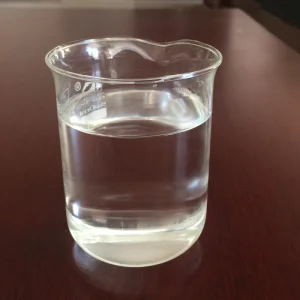
| Physical Appearance | Clear, colorless, fuming hygroscopic liquid | Visual Inspection under controlled optical cell |
| Density (at 20°C, Monohydrate) | 1.030 – 1.032 g/cm³ | Digital Oscillating U-Tube Densitometer |
| Freezing / Melting Point | 2.0 °C (Anhydrous) / -51.7 °C (Monohydrate eutectic) | Differential Scanning Calorimetry (DSC) |
| Chloride Impurity (Cl⁻) | ≤ 1.0 – 5.0 ppm (Ultra-Pure Electronic Grade) | Ion Chromatography (IC) |
| Non-Volatile Residue (NVR) | ≤ 0.005% w/w max | Gravimetric Evaporation at 105°C |
| Boiling Point (101.3 kPa) | 113.5 °C (Anhydrous) / 120.1 °C (Monohydrate) | Equilibrium Distillation System |
From advanced aerospace hypergolic propulsion systems to decarbonized utility boiler water conditioning, explore targeted operational deployments.
Widely utilized across supercritical and subcritical power stations as a volatile, residue-free oxygen scavenger. Reacts dynamically with dissolved O₂ to produce molecular nitrogen and water, effectively suppressing pitting corrosion on boiler internal walls without loading boiler water with dissolved solids.
Scavenger Mechanism: N₂H₄ + O₂ → N₂ + 2H₂OCAS 302-01-2 is the premier foundation for space exploration thrusters, satellite orbital adjustment thrusters, and missile launch systems. Utilized as anhydrous fuel reacting instantaneously upon contact with dinitrogen tetroxide (N₂O₄), or decomposed catalytically over iridium catalysts (e.g., Shell 405) in cold-gas thrusters.
Hypergolic Specific Impulse: >230sServes as the indispensable chemical precursor in the industrial synthesis of Azodicarbonamide (ADC), azobisisobutyronitrile (AIBN), and benzenesulfonyl hydrazide (BSH). These specialized blowing agents release controlled volumes of inert N₂ during extrusion, forming ultra-light elastomeric foams for automotive and packaging materials.
ADC & Sulfonyl Hydrazide PrecursorFacilitates targeted heterocyclic ring constructions including triazoles, pyrazoles, and pyridazines. These structures form the bio-active core of critical pharmaceuticals (such as tuberculostatic isoniazid and psychotropic medicines) and active agricultural fungicides, herbicides, and plant growth regulators.
Heterocyclic Ring SynthesisUsed as an ultra-pure liquid reducing agent for the electroless plating and chemical vapor deposition (CVD) of copper, nickel, and precious metals onto silicon wafers and glass substrates. Ensures uniform nanometer-scale metallization layers without introducing carbon matrix poisoning.
Semiconductor Grade: ≤ 10ppb CationsExamining technological shifts from traditional Raschig synthesis to greener peroxide pathways and emerging hydrogen-carrier roles.
Globally, the procurement economics of CAS No. 302-01-2 are transitioning under environmental pressures and high-efficiency manufacturing mandates. Historically reliant on the classic Olin-Raschig process (reaction of sodium hypochlorite with ammonia), legacy plants faced high salt waste volumes and significant wastewater treatment loads. Modern manufacturing leaders have adopted the Hydrogen Peroxide (Ketazine / Pechiney-Ugine-Kuhlmann) route. In this closed-loop catalytic cycle, ammonia and hydrogen peroxide react in the presence of methyl ethyl ketone (MEK) and an organic acetamide activator, eliminating hazardous salt by-products and generating clean water as the sole effluent.
Looking toward future commercial horizons, hydrazine derivatives are attracting intense academic and defense interest as high-capacity liquid hydrogen storage media and direct liquid fuel cell (DLFC) fuels. Anhydrous hydrazine carries a volumetric hydrogen density of 12.6 wt.%, surpassing compressed hydrogen cylinders and liquid ammonia under ambient conditions without cryogenic refrigeration constraints.
Transition from chlorine-based oxidation to catalytic hydrogen peroxide systems minimizes halogen contaminants, generating export products suitable for stringent semiconductor and active pharmaceutical ingredient (API) criteria.
Development of anode catalyst systems resistant to nitrogen poison. DHFC units operate at ambient temperature with zero carbon dioxide emissions, yielding exclusively nitrogen gas and pure steam for auxiliary military and expeditionary power grids.
Hybridization of stabilized hydrazine solutions with ultra-fine metal powders (such as micronized spherical aluminum and magnesium additives) to optimize propulsion density and burn velocity profiles in satellite orbit insertion boosters.
How state-of-the-art Chinese chemical clusters integrate raw materials, energy grids, and port infrastructure to guarantee stable bulk deliveries worldwide.
China remains the primary global supplier of hydrazine derivatives and upstream chemical reagents due to upstream synthetic ammonia and hydrogen peroxide integration. Industrial operations situated in tier-1 chemical industry parks benefit from continuous pipeline-fed ammonia feedstock, avoiding the volatility of road-transported precursor materials and shielding overseas buyers from sudden market price shifts.
At Yanxatech System Industries Limited (YANXA), this structural strength is reinforced by advanced analytical infrastructure. Operating since 2008, YANXA applies automated distributed control systems (DCS), gas chromatography-mass spectrometry (GC-MS), and inductively coupled plasma mass spectrometry (ICP-MS) to confirm purity profiles, trace cations, and stabilizer parameters before cargo dispatch.
Direct pipeline feeds of electronic-grade ammonia and ultra-pure oxidizers maintain continuous operating cycles, mitigating production interruptions during seasonal shifts or international raw material bottlenecks.
Every batch is logged with retained reference samples under dual-custody protocols for a minimum of 24 months, enabling audit trail transparency and verification of physical/chemical properties.
Deep-water berths in Shanghai, Ningbo, and Qingdao are equipped for rapid Class 8, Class 6.1, and Class 3 hazardous chemical handling, ensuring short lead times and direct maritime departures across worldwide shipping lanes.
Comprehensive regulatory coverage to protect your imports against port authority rejections, customs holds, and occupational safety non-compliance.
Procuring CAS No. 302-01-2 internationally involves navigating stringent environmental and hazardous substance frameworks. Hydrazine is classified under international hazardous materials codes as both a corrosive liquid and a toxic substance (UN 2029 for Anhydrous Hydrazine, Class 8 [6.1, 3]; UN 2030 for Hydrazine Aqueous Solutions, Class 8 [6.1]). In the European Union, Hydrazine is monitored under REACH regulations and identified as a Substance of Very High Concern (SVHC), requiring strict authorization dossiers, localized exposure scenario (ES) modeling, and closed-loop automated transfer engineering.
YANXA supplies export documentation covering regional jurisdictional mandates:
Safety Data Sheets formatted to local target market regulations (EU REACH CLP, US OSHA HazCom 2012, Japan GHS, K-REACH) across multiple destination languages.
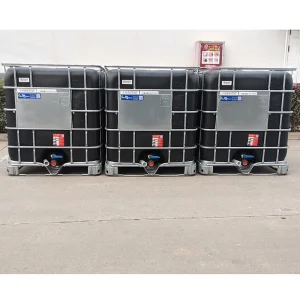
Supplied in heavy-gauge 316L stainless steel drums, fluorinated high-density polyethylene (HDPE) containers, or specialized ISO tank containers with nitrogen pad seals to prevent oxidation.
Direct communication with chemical process engineers regarding closed-system dry-break couplings, emergency scrubbers, scrubber liquors, and ambient monitoring sensors.
Direct technical and logistical answers addressing the primary concerns of import managers and lead chemical process engineers.
CAS 302-01-2 technically refers to anhydrous hydrazine (N₂H₄, pure base). CAS 7803-57-8 specifically indexes Hydrazine Monohydrate (N₂H₄·H₂O). In wholesale commerce, industrial inquiries referencing CAS 302-01-2 often specify aqueous solutions (55%, 64%, or 80%) where purity is calculated based on active N₂H₄ content.
Hydrazine is a strong reducing agent and attacks natural rubber, copper, zinc, and mild steels. Recommended materials are high-grade passivated austenitic stainless steels (304L, 316L), titanium, or fluoropolymers (PTFE, PFA). Nitrogen ullage padding is essential to prevent vapor decomposition.
All maritime shipments adhere to the International Maritime Dangerous Goods (IMDG) Code. CAS 302-01-2 solutions are dispatched under UN 2030 (Class 8, Sub-risk 6.1, Packing Group II), packed in UN-certified 200L polyethylene or 316L drums, accompanied by DG Declarations and emergency response procedures.
Yes. We offer contract blending under inert nitrogen atmospheres to provide customized concentrations (e.g., 35% deoxygenation formulations with catalyzed quinone accelerators or 55% standard synthesis grades) tailored to client plant operating procedures.
Our standard export Certificate of Analysis certifies absolute assay (potentiometric titration), density, iron (Fe), chlorides (Cl), non-volatile residue (NVR), and heavy metals. For electronic applications, ICP-MS analysis detailing cation contaminants below ppb thresholds is available upon request.
Subject to regulatory pre-clearance and end-user declarations (EUD) for hazardous products, representative batch samples (100ml to 500ml) sealed in certified barrier containers with complete COA and SDS are available for qualified buyers.
Explore additional high-performance industrial chemicals, ultra-pure noble gases, and specialty inorganic nitrates for comprehensive enterprise sourcing.






Coordinate project-specific assays, obtain formal batch quotations, and request comprehensive compliance documentation tailored to your facility parameters.
Initiate Engineering Consultation