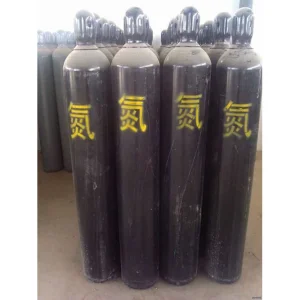
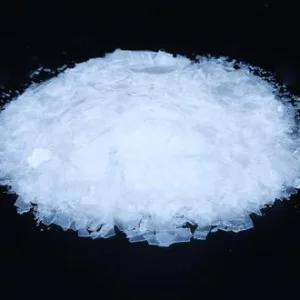
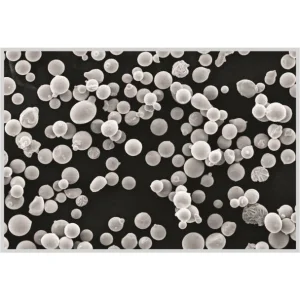
Precision-manufactured raw materials, ultra-pure specialty gases, atomized alloy powders, and polymer elastomer solutions curated for advanced industrial procurement.



Navigating molecular purity, polymorphic phase transitions (α-TCP vs β-TCP), and advanced precipitation engineering for mission-critical downstream applications.
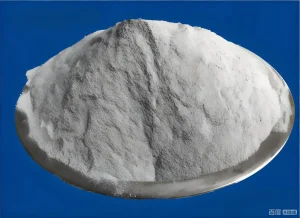
Tri-Calcium Phosphate (TCP), chemically designated as Ca3(PO4)2 (CAS Registry No. 7758-87-4, EINECS 231-840-8), represents one of the most versatile and functionally critical inorganic mineral salts synthesized across modern heavy and fine chemical manufacturing. Industrially, the term "tricalcium phosphate" often encompasses a complex spectrum of calcium orthophosphates, frequently approximating hydroxyapatite [Ca10(PO4)6(OH)2] or amorphous calcium phosphate with a stoichiometric Ca/P molar ratio rigorously controlled between 1.50 and 1.67. Driven by intensifying demands across high-purity food science (E341(iii)), active pharmaceutical ingredients (API) formulation, biomedical scaffold engineering, functional ceramic dielectrics, and continuous polymerization suspension processes, the global market for wholesale TCP is undergoing a profound paradigm shift away from commoditized bulk salt toward custom-engineered, application-specific morphologies.
In modern chemical engineering, the functional efficacy of TCP is fundamentally governed by its crystalline phase. TCP occurs in two distinct polymorphs: the low-temperature β-tricalcium phosphate (β-TCP, rhombohedral structure) and the high-temperature α-tricalcium phosphate (α-TCP, monoclinic structure), transitioning reversibly at approximately 1125°C. While β-TCP demonstrates exceptional thermodynamic stability at physiological temperatures—rendering it the premier synthetic resorbable biomaterial for orthopedics and dental osteoconductive matrix engineering—α-TCP possesses significantly higher chemical reactivity and dissolution kinetics, making it the indispensable active hydraulic component in self-setting calcium phosphate cements (CPC). Understanding these crystalline kinetics allows leading wholesale suppliers to deliver tailor-made phase ratios optimized precisely for dissolution rate, moisture scavenging, or skeletal integration.
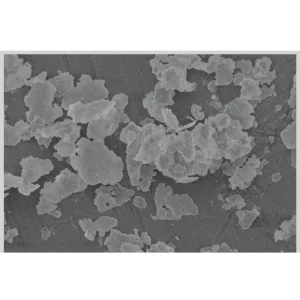
Beyond polymorphic crystallization, the industrial performance of wholesale TCP is heavily dictated by Particle Size Distribution (PSD), specific surface area (BET), and bulk density. As an anti-caking agent and flow conditioning aid, fine milling down to sub-micron or low-micron regimes (D50 between 2.5 μm and 8.0 μm) enables TCP particles to electrostatically coat hygroscopic host particles (such as powdered beverage mixes, milk powders, spice blends, and tableting direct blends), forming an impermeable physical barrier against capillary liquid bridging. Concurrently, controlled porosity allows TCP to absorb up to 10% to 15% of its own weight in ambient moisture or volatile oils without compromising its free-flowing rheology.
Conversely, for pharmaceutical direct compression binders and wet granulation diluents, high-bulk-density, agglomerated spherical grades (D50 between 45 μm and 150 μm) are synthesized via automated spray-drying. These spherical aggregates exhibit exceptional plasto-elastic deformation dynamics under compression, yielding tablets with superior crushing strength, minimal friability (< 0.5%), and uniform drug-loading stability, completely mitigating internal segregation within continuous tableting lines.
How Chinese chemical infrastructure integrates high-grade thermal phosphoric acid with smart automation to guarantee international compliance and extreme cost-efficiency.
Direct factory synthesis utilizes integrated upstream thermal-process or purified wet-process phosphoric acid (PPA). Direct control of phosphate rock refining drastically reduces raw mineral volatility and heavy metal contamination at the reaction source.
Precision neutralization of calcium hydroxide [Ca(OH)2] slurry with high-purity phosphoric acid via closed-loop Distributed Control Systems (DCS). Reaction pH is monitored within ±0.05 units to freeze stoichiometric Ca/P ratios reliably.
High-efficiency rotary kilns and spray-calcination units equipped with laser-monitored thermal mapping enforce homogeneous crystal transitions, completely burning off residual carbonates and achieving high whiteness indices (>96.5%).
Production lines align with international certification frameworks: ISO 9001, ISO 22000, FSSC 22000, cGMP, Halal, and Kosher. Every production lot is paired with ICP-MS and Malvern Mastersizer batch Certificates of Analysis (COA).
Global procurement directors sourcing wholesale TCP face persistent risks surrounding trace element cross-contamination, freight delays, and specification drift between pre-shipment laboratory samples and bulk container deliveries. Heavy metal contamination represents the single highest compliance risk in food and pharmaceutical import streams. Under European Food Safety Authority (EFSA) guidance and US FDA Food Chemicals Codex (FCC), stringent ceilings on toxic elements—specifically Lead (Pb ≤ 1 mg/kg), Cadmium (Cd ≤ 1 mg/kg), Arsenic (As ≤ 1 mg/kg), and Fluoride (F ≤ 50 mg/kg)—mandate hyper-vigilant purification protocols.
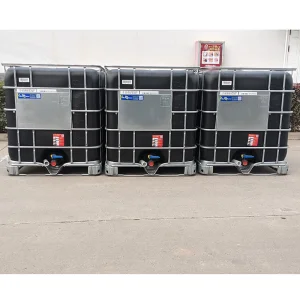
Modern Chinese 4.0 chemical installations have resolved these historical hurdles by transitioning away from crude dry-milling toward continuous multi-stage crystallization followed by hydro-cyclone scrubbing and microfiltration. Automated optical sorting and inline X-ray fluorescence (XRF) monitoring verify elemental purity before product enters automated clean-room packaging lines. Furthermore, tier-1 manufacturers mitigate maritime logistics vulnerabilities by executing strategic stock allocations at major multimodal ports (Shanghai, Qingdao, Ningbo), bundling palletized sea-worthy PE-lined multi-wall paper bags or heavy-duty bulk tote bags with container desiccant systems to guarantee zero moisture pickup during transoceanic transit.
Direct comparative parameters across food, pharmaceutical, biomedical, and industrial engineering grades to guide precision material procurement.
| Analytical Parameter | Food Grade (FCC / E341(iii)) | Pharma Grade (USP / EP / BP) | Biomedical Grade (β-TCP) | Technical / Ceramic Grade |
|---|---|---|---|---|
| Assay [as Ca3(PO4)2] | ≥ 98.0% (Ignited Basis) | 98.0% – 103.0% | ≥ 99.5% (β-Phase Purity) | ≥ 95.0% – 97.0% |
| Calcium Content (Ca) | 34.0% – 40.0% | 37.5% – 40.0% | 38.0% – 39.5% | 34.0% – 38.0% |
| Loss on Ignition (L.O.I.) | ≤ 8.0% (at 800°C) | ≤ 8.0% (at 800°C) | ≤ 1.0% (at 1000°C) | ≤ 10.0% |
| Heavy Metals (as Pb) | ≤ 1.0 mg/kg | ≤ 0.5 mg/kg | ≤ 0.1 mg/kg (Trace ICP-MS) | ≤ 10.0 mg/kg |
| Arsenic (As) | ≤ 1.0 mg/kg | ≤ 1.0 mg/kg | ≤ 0.2 mg/kg | ≤ 3.0 mg/kg |
| Fluoride (F) | ≤ 50.0 mg/kg | ≤ 50.0 mg/kg | ≤ 10.0 mg/kg | ≤ 150.0 mg/kg |
| Typical Particle Sizing (D50) | 3.0 μm – 12.0 μm (Fine) | 25.0 μm – 120 μm (Granular) | 0.5 μm – 5.0 μm (Nano/Micro) | 5.0 μm – 45.0 μm |
| Primary Compliance | FCC / FDA / EFSA | USP / EP / JP / cGMP | ISO 13175-3 / ASTM F1088 | ISO 9001 / REACH |
From micro-encapsulated food matrices to regenerative orthopedic bioceramics: real-world functional integration of Tri-Calcium Phosphate.
E341(iii) certified TCP acts as an indispensable anti-caking agent, pH buffer, and bioavailable calcium fortifier in nutritional dry beverages, dairy powders, seasonings, and baking powders without altering taste, color, or sensory profiles.
Direct-compression tablet binder and disintegrant for oral dosage systems. Its outstanding chemical inertness, high bulk density, and porous internal microstructure provide a reliable carrier platform for sensitive pharmaceutical active substances.
High-purity β-TCP exhibits controlled in vivo bioresorbability matching physiological bone remodeling rates. Widely synthesized for synthetic bone graft substitutes, 3D bioprintable bioceramic filaments, and remineralizing oral care dentifrices.
Technical TCP serves as an essential Pickering suspension stabilizing agent in expandable polystyrene (EPS) polymerization. Additionally utilized as a grain-growth inhibitor and flux in advanced dielectric ceramic and electro-optic sintering.
Procuring TCP on a wholesale scale requires nuanced alignment with divergent geographic compliance systems. In the United States, TCP is Generally Recognized as Safe (GRAS) under 21 CFR 182.1217 and governed by USP monograph standards, requiring full verification of heavy metals and loss on drying. Across the European Union, Commission Regulation (EU) 231/2012 imposes rigorous criteria under E341(iii), with renewed scrutiny regarding nanoparticle thresholds. Advanced manufacturers guarantee that the primary particle aggregate distribution avoids unauthorized nano-fraction thresholds (< 100 nm), mitigating classification liabilities under current EFSA directives.
In Asia-Pacific, Latin America, and Middle Eastern territories, procurement strategies focus heavily on dual-function fortifiers capable of surviving elevated ambient humidity and fluctuating cold-chain transport. In these dynamic emerging sectors, custom surface-treated hydrophobic TCP formulations prevent clump formation in bulk industrial seasoning drums and animal feed premixes, preserving functional homogeneity over 24-month export lifecycles.
Exhaustive answers to technical, regulatory, and supply chain queries encountered by international chemical and ingredients buyers.
Explore our comprehensive chemical manufacturing matrix, engineered to rigorous global specifications with complete end-to-end quality traceability.