Specification-controlled functional precursors engineered for scalable chemical processing, catalytic conversion, and high-performance powder metallurgy.

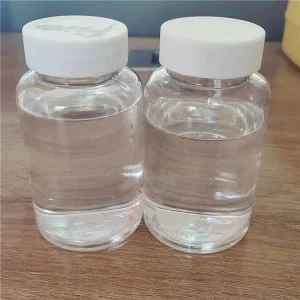
Evaluating structural shifts in bismuth consumption, environmental regulatory impacts, and strategic supply chain de-risking for Fortune 500 chemical procurers.
Bismuth(III) Nitrate Pentahydrate [CAS No. 10035-06-0] occupies a critical nexus in industrial inorganic chemistry. As an environmentally benign heavy metal salt, its demand profile has undergone a systemic paradigm shift over the past decade. Bismuth is universally recognized as the non-toxic successor to toxic lead, antimony, and mercury compounds across pigment formulation, microelectronics, pharmaceutical compounding, and polymer curing catalysis.
However, over 80% of primary mined and refined bismuth reserves reside geographically within China's polymetallic ore belts (predominantly in Hunan, Guangdong, and Jiangxi). For international tier-1 chemical manufacturers in North America, the European Union, and the Asia-Pacific region, single-point logistics failure and unpredictable regulatory tariffs pose acute procurement risks. Yanxatech System Industries Limited (YANXA) addresses this vulnerability through an integrated, upstream-to-downstream manufacturing ecosystem. By controlling refined bismuth ingot sourcing (Grade 99.99% min) directly from state-of-the-art smelting facilities and executing automated closed-loop nitric acid dissolution, our manufacturing facilities guarantee uninterrupted bulk delivery even through volatile raw material price spikes.
Under the EU's escalating REACH Authorisation List expansions and stringent US EPA TSCA frameworks, toxic heavy metal compounds face accelerating outright bans. Industrial polyurethane formulations historically dependent on toxic mercury-based catalysts (such as phenylmercuric neodecanoate) are transitioning decisively toward organobismuth carboxylate catalysts, which are directly synthesized utilizing high-purity Bismuth Nitrate Pentahydrate as the foundational chemical precursor.
Similarly, the radiation shielding and radiological contrast industries are systematically decommissioning lead-based textiles and stabilizers. Bismuth(III) compounds provide comparable K-edge X-ray attenuation cross-sections without the occupational bioaccumulation hazards and expensive toxic disposal mandates intrinsic to plumbic compounds.
High-purity Bi(NO₃)₃·5H₂O serves as the fundamental intermediate for bismuth subsalicylate, bismuth subgallate, and colloidal bismuth subcitrate. Our controlled crystallization prevents trace heavy metal co-precipitation, meeting rigorous Ph. Eur. and USP monographs.
Ultra-pure electronic grade precursors (99.999%) designated for the chemical vapor deposition (CVD) and sol-gel synthesis of Bismuth Ferrite (BiFeO₃) multiferroic materials, bismuth titanate dielectric ceramics, and topological insulator crystalline thin films.
Engineered precursor for heterogeneous oxidation catalysts and photocatalytic Bismuth Oxyhalides (BiOCl, BiOBr, BiOI). Enables solar-driven wastewater degradation and non-corrosive Lewis-acid organic transformations under mild process parameters.
Rigorous thermodynamic and kinetic stabilization prevents hydrolysis-induced precipitation of basic bismuth nitrates [BiO(NO₃)], ensuring crystal clarity and batch uniformity.
| Analytical Parameter | Industrial Grade (Technical) | Pharma / Reagent Grade (AR) | Electronic Grade (High Purity) |
|---|---|---|---|
| Assay [Bi(NO₃)₃·5H₂O] | ≥ 99.0% | ≥ 99.5% | ≥ 99.99% – 99.999% (Metals Basis) |
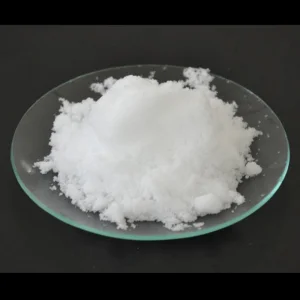
| Physical Appearance | White crystalline aggregates | Colorless to white columnar crystals | Lustrous transparent prism crystals |
| Insoluble Matter (Dilute HNO₃) | ≤ 0.05% | ≤ 0.005% | ≤ 0.001% (Sub-micron filtered) |
| Chloride (Cl⁻) | ≤ 0.01% | ≤ 0.001% (10 ppm) | ≤ 1 ppm |
| Sulfate (SO₄²⁻) | ≤ 0.02% | ≤ 0.005% (50 ppm) | ≤ 2 ppm |
| Iron (Fe) | ≤ 50 ppm | ≤ 10 ppm | ≤ 0.5 ppm |
| Lead (Pb) & Copper (Cu) | ≤ 50 ppm | ≤ 10 ppm | ≤ 0.2 ppm (ICP-MS Validated) |
| Alkali / Alkaline Earths (as SO₄) | ≤ 0.1% | ≤ 0.03% | ≤ 5 ppm total |
The industrial synthesis of Bismuth(III) Nitrate Pentahydrate requires rigorous thermodynamic optimization. Metallic bismuth reacts exothermically with high-purity nitric acid according to the reaction stoichiometry:
Bi + 4 HNO₃ + 3 H₂O → Bi(NO₃)₃·5H₂O + NO↑
A primary chemical engineering obstacle in industrial-scale dissolution is the vulnerability of the bismuth cation (Bi³⁺) to hydrolyze when the free acid concentration dips below critical threshold values. Dilution with water triggers immediate spontaneous precipitation of basic bismuth nitrate (bismuth subnitrate):
Bi(NO₃)₃ + H₂O → BiO(NO₃)↓ + 2 HNO₃
Yanxatech utilizes an advanced multi-stage automated crystallization cascade. Dissolution reactors maintain an active residual concentration of free nitric acid (HNO₃) within calibrated stoichiometric ranges, paired with vacuum fractional evaporative crystallization at sub-ambient temperatures. This prevents thermal decomposition to basic sub-salts, preserves pure pentahydrate crystalline lattice geometry, and yields exceptional dissolution clarity in acidified alcoholic or aqueous solutions.
Complete Dangerous Goods (DG) regulatory management from China to global destination discharge ports under IMDG, IATA, and DOT protocols.
Officially classified under UN 1477 (Nitrates, Inorganic, N.O.S.), Hazard Class 5.1, Packing Group II. Shipped with fully authorized Dangerous Goods Declarations (DGD), GHS SDS, and batch COA.
Packaged in 25kg UN-approved fiber drums or high-density polyethylene (HDPE) pails with multi-layer hermetically sealed aluminum foil moisture barriers to prevent deliquescence and efflorescence.
Every export lot includes full Certificate of Analysis documenting ICP-MS heavy metal profiles, titration assay, insoluble percentage, and XRD crystalline phase verification. Retained samples archived for 36 months.
Full FCL and consolidated LCL DG maritime shipments directly from Shanghai and Qingdao deepwater ports. Localized customs document clearance support provided across North America, the EU, and ASEAN.
Answers to complex material verification, solubility management, and international purchasing considerations.
Discover our comprehensive range of high-performance polymer modifiers, specialty electronic gases, and inorganic functional additives.