Explore our export-ready batch inventories. Certified under ISO 9001 and verified through rigid pre-shipment COA assays for industrial blending, coating, and compounding.
A comprehensive examination of Ethylene Propylene Diene Terpolymer liquid systems engineered for extreme thermal endurance, chemical passivity, and seamless barrier integrity.
Ethylene Propylene Diene Monomer (EPDM) in liquid formulation represents a significant leap forward in reactive polymer technology. Unlike traditional solid, high-molecular-weight EPDM bales that require high-shear Banbury mixing, heavy energy consumption, and high-temperature mastication, liquid EPDM systems provide a fluid, low-to-medium viscosity terpolymer backbone. This architecture allows seamless processing at ambient or moderately elevated temperatures while retaining the fundamental chemical resistance attributes that make vulcanized EPDM the benchmark elastomer across global industries.
The chemical resilience of liquid EPDM originates from its saturated aliphatic polymethylene backbone. With chemical unsaturation strictly isolated to pendant diene side chains—typically ethylidene norbornene (ENB) or dicyclopentadiene (DCPD)—the macromolecular chain remains completely immune to ozone-induced scission, oxidative attack, and long-wave ultraviolet (UV-A and UV-B) degradation. Liquid EPDM rubbers formulated by wholesale manufacturers are engineered to serve two primary market functions: as a fully reactive, 100% solids, cold-applied curable waterproofing and anti-corrosion barrier membrane, and as an active macromolecular plasticizer and co-vulcanizable impact modifier for engineering thermosets and dense rubber vulcanizates.
Global architectural and industrial sectors demand low-VOC and zero-VOC compounds. Modern liquid EPDM formulations cure through moisture, platinum catalysis, or ambient oxidation without off-gassing volatile solvents, preventing shrinkage, vapor blistering, and structural pinholes.
Because diene functionalities remain available along the polymer skeleton, liquid EPDM co-cures directly with sulfur and peroxide packages in solid EPDM, SBR, and natural rubber matrixes, eliminating plasticizer migration and preventing embrittlement over prolonged lifecycles.
With an inherently non-polar molecular framework, vulcanized liquid EPDM coatings prevent ponding water penetration, acid rain degradation, and saline salt-fog ingress, delivering monolithic protection for infrastructure assets across marine and chemical environments.
Strategic purchasing criteria evaluated by OEM manufacturers, Tier-1 aerospace engineers, and chemical procurement departments worldwide.
Industrial lines demand lot-to-lot consistency. BrookField RVT viscosities must strictly adhere to specifications (typically 10,000 to 120,000 mPa·s at 25°C) to ensure pumpability in high-pressure airless spray units and continuous extrusion machines.
Precise control of ethylene content (typically 45–65 wt%) dictates low-temperature flexibility versus green strength. ENB/DCPD diene content controls cross-linking kinetics and final hardness (Shore A 30 to 80).
By moving to liquid-phase processing, manufacturers bypass vulcanization autoclaves and high-energy kneading equipment, drastically decreasing capital expenditure and electricity consumption per production metric ton.
Wholesale volume commitments supported by robust storage silos, integrated catalyst supply chains, and bulk ISO-tank container networks protect downstream processing plants from raw material shortages.
| Grade Designation | Polymer Type | Viscosity (mPa·s @ 25°C) | Diene Content (ENB %) | Tensile Strength (MPa) | Core Application |
|---|---|---|---|---|---|
| EPDM-LQ 2100 | Low-viscosity Terpolymer | 8,000 – 15,000 | 4.5% | ≥ 3.2 | Sprayable Roof Coatings |
| EPDM-LQ 4500 | Medium Reactive Liquid | 35,000 – 50,000 | 7.5% | ≥ 6.5 | Industrial Joint Sealants |
| EPDM-LQ 8000 | High Molecular Prepolymer | 85,000 – 110,000 | 9.8% | ≥ 9.8 | Vulcanized Rubber Modifier |
| EPDM-LQ FX-Mod | Functionalized Liquid Polymer | 20,000 – 35,000 | 6.0% | ≥ 5.0 | Composite & Adhesive Resin |
Strategic deployment of liquid EPDM chemistries across heavy civil infrastructure, automotive manufacturing, and chemical storage facilities.
Traditional EPDM sheet membranes require mechanical fasteners and adhesive-bonded seams, which constitute up to 85% of roof failure points. Liquid-applied EPDM rubber forms a seamless, monolithic vulcanized membrane directly over concrete decks, aged bitumen, metal surfaces, and polyurethane foam. It permanently eliminates seams, accommodates severe seismic movement, and withstands ponding water under solar heating conditions without hydrolytic breakdown.
Electric vehicle (EV) battery packs demand airtight, moisture-impermeable, and flame-retardant encapsulation seals. Liquid EPDM provides automated robotic bead dispensing for battery enclosure covers, underbody acoustic dampening, and HVAC channel gaskets. Its high dielectric breakdown strength (> 20 kV/mm) and non-conductive baseline make it an essential barrier preventing electrical arching and moisture short-circuiting in modern mobility applications.
Chemical processing operations, fertilizer holding bunds, and wastewater aeration tanks are exposed to corrosive acids, alkaline slurries, and extreme temperature cycling. Liquid EPDM elastomer formulations offer chemical resistance against dilute hydrochloric acid, sulfuric acid, sodium hydroxide solutions, and polar solvents, shielding concrete containment tanks from structural corrosion and hazardous soil leaching.
Stringent compliance protocols to ensure that high-purity chemical shipments meet international statutory and safety frameworks.
Exporting specialty liquid rubbers, co-polymers, and advanced chemical additives across international borders requires rigorous quality controls and adherence to international trade laws. Every production run undergoes verification through Fourier-Transform Infrared Spectroscopy (FTIR) fingerprinting, Gel Permeation Chromatography (GPC) molecular weight distribution tracking, and Karl Fischer coulometric moisture titration. We guarantee batch consistency across metric-ton deliveries.
Full compliance with European Chemicals Agency (ECHA) SVHC thresholds and registration annexes.
Fully compliant Safety Data Sheets translated into over 15 target-market languages with unified hazard warnings.
Certified steel drums, IBC totes, and ISO tanks tested for dangerous and non-dangerous goods transport.
Traceable lot numbering from precursor monomer fractionation down to packaged drum deliveries.
Pioneering the next era of bio-attributed monomer synthesis, metallocene catalyst refinement, and smart curing systems.
Replacing legacy Ziegler-Natta catalysts with advanced constrained-geometry metallocene catalyst systems. This narrows molecular weight distributions (Mw/Mn < 2.1) and prevents low-molecular-weight oligomeric leaching, resulting in cleaner and purer liquid EPDM rubber bases.
Transitioning toward bio-ethylene derived from certified non-food agricultural biomass. This enables carbon-neutral EPDM polymers that maintain the exact performance envelope of petrochemical-derived equivalents while lowering downstream Scope 3 greenhouse emissions.
Developing photo-initiator-functionalized liquid EPDM that achieves initial surface tack-free curing within 30 seconds under targeted UV illumination, followed by deep secondary ambient moisture-cure for complex 3D potting and gaskets.
In-situ dispersion of surface-modified graphene platelets and nano-silica inside the liquid polymer bulk, achieving a 300% boost in tensile tear strength, electrical antistatic properties, and near-zero thermal expansion characteristics.
Direct responses to essential technical questions regarding the chemistry, application, and storage of liquid EPDM polymers.
Unlike polyurethane coatings, which degrade via ester/urethane chain hydrolysis when exposed to permanent ponding water, liquid EPDM features a non-polar hydrocarbon backbone completely impervious to water attack. Compared to acrylics, which embrittle at freezing temperatures and soften under solar heat, EPDM remains flexible down to -50°C and stable up to 150°C without chalking or cracking.
We supply both 1-part (1K) moisture-curing pre-catalyzed formulations that cure via atmospheric humidity at ambient temperatures, and 2-part (2K) reactive catalyst packages. The 2K systems cure through platinum-catalyzed hydrosilylation or organic peroxide cross-linking, providing rapid through-cure capabilities independent of atmospheric moisture or film thickness.
Yes. Because the chemical base of liquid EPDM is functionally identical to aged cured sheet EPDM, molecular cross-penetration occurs when liquid EPDM is applied over properly cleaned existing sheets. This eliminates the need for aggressive solvent primers and creates a seamless vulcanized weld over deteriorated seams and flashings.
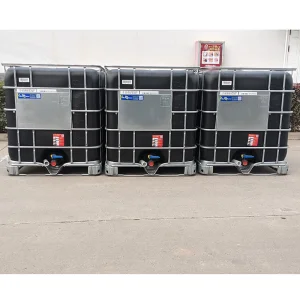
Standard packaging configurations include 20-liter airtight metal pails, 200-liter UN-rated coated steel drums, and 1,000-liter composite IBC totes. For bulk industrial compounding clients, heated ISO-tank container deliveries (up to 24 metric tons) are routinely organized with nitrogen-blanketing to prevent premature oxidation or moisture exposure.
Access our factory-direct specialty portfolio. Inquire for current batch inventories, certified technical data sheets (TDS), and commercial quotations.