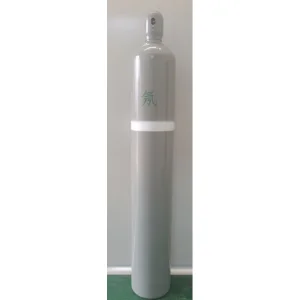
Direct supply from state-level production bases across specialty gases, organosilicon compounds, specialized polymers, and active nitrates.
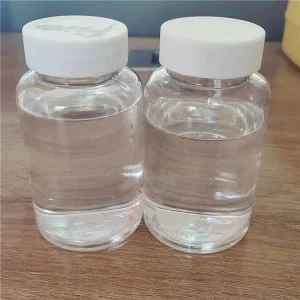
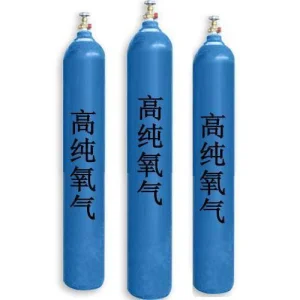
Bridging macro procurement specifications with deep chemistry engineering. Meeting demanding thresholds across aerospace propulsion, water treatment, agrochemical intermediates, and polymer blow agents.
Anhydrous Hydrazine (CAS 302-01-2) functions as a hypergolic storable liquid fuel and monopropellant in satellite thrusters, reaction control systems (RCS), and orbital maneuvering systems.
Hydrazine Hydrate (CAS 7803-57-8) offers superior dissolved oxygen scavenging in high-pressure steam generators, nuclear circuits, and thermal power generation without yielding solid minerals.
An indispensable bifunctional nucleophile for triazole, tetrazole, and pyrazole heterocycles, as well as azodicarbonamide (ADC) blowing agents for closed-cell polyolefin foams.
Because hydrazine and water form an azeotrope at 68.5 mol% (approximately 58.5 wt% hydrazine, 120.1°C), standard atmospheric distillation cannot produce anhydrous hydrazine. Factory engineering leverages specialized dehydration pathways.
| Manufacturing Route | Feedstocks & Reagents | Separation / Extraction Tech | Energy Efficiency & Eco Profile | Primary Industrial Utility |
|---|---|---|---|---|
| Ketazine (Pechiney-Ugine-Kuhlmann) | Ammonia, Hydrogen Peroxide, Methyl Ethyl Ketone (MEK) | Ketazine hydrolysis under pressure, followed by MEK recycling | Salt-free effluent, high thermal efficiency, lower operational emissions | Preferred modern standard for 80%–100% Hydrazine Hydrate |
| Raschig Process | Sodium Hypochlorite, Ammonia, Gelatin/Glue stabilizer | Multi-stage atmospheric stripping and salting-out fractionation | Yields dilute hydrazine liquor with substantial NaCl waste stream | Traditional bulk industrial grade; requires intensive waste-water treatment |
| Azeotropic Distillation (Anhydrous) | Hydrazine Hydrate 100%, Aniline / Hexyl Alcohol entrainers | Ternary azeotrope fractionation breaking the binary vapor-liquid barrier | Closed-loop solvent recovery; rigorous thermal control to avoid degradation | Aerospace propellants, specialized defense synthetic reagents |
| Extractive Dehydration with Caustic | Hydrazine Hydrate, Solid Sodium Hydroxide / Potassium Hydroxide | Liquid-liquid phase split followed by dry inert-atmosphere distillation | Batchwise operation; requires handling molten caustic residue | Laboratory to pilot ultra-pure anhydrous hydrazine synthesis |
Navigating chemical weapons convention declarations, dangerous goods packaging protocols, and customs clearance requirements across the Americas, Europe, and Asia-Pacific.
Anhydrous hydrazine and concentrated hydrate solutions fall under export control lists and Missile Technology Control Regime (MTCR) oversight.
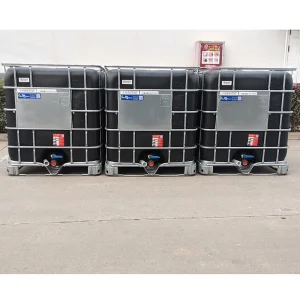
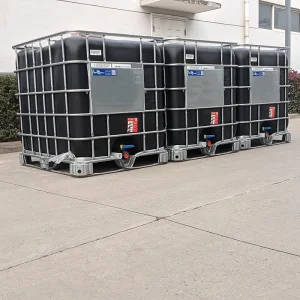
Engineered packaging ensures vapor suppression and galvanic neutrality against catalytic metallic oxides.
Proper declaration of dangerous cargo: UN 2029 (Anhydrous, Class 8, Sub-risk 3, 6.1) and UN 2030 (Hydrate, Class 8, Sub-risk 6.1).
Assisting tier-one importers with technical registration dossiers and toxicological threshold risk assessments.
Beyond traditional industrial deoxygenation and energetic propulsion, modern chemistry is positioning hydrazine derivatives at the center of carbon-neutral clean power and next-generation metallurgy.
Hydrazine hydrate possesses an outstanding theoretical electromotive force of 1.56 V and a gravimetric hydrogen storage density of 12.5 wt%. Operating without precious platinum catalysts, DHFCs yield pure nitrogen and water as exhausts, providing emission-free portable and emergency backup power generators.
In advanced semiconductor fabrication, ultra-pure anhydrous hydrazine serves as an atomic layer deposition (ALD) and chemical vapor deposition (CVD) precursor. Its strong reducing properties allow deposition of high-k metal nitrides and pure metal interconnects at significantly lower thermal budgets than standard ammonia.
Hydrazine reduction acts as a selective reducing agent to recover gold, platinum, and palladium from spent electronic printed circuit boards and exhausted catalytic converters, delivering metal precipitations above 99.9% purity while cutting hazardous slag discharge.
Key information regarding assay validation, chemical compatibility, hazardous transport, and customs documentation.
Hydrazine Hydrate (N2H4·H2O, CAS 7803-57-8) contains water chemically bound in a 1:1 molar ratio, typically supplied in concentrations from 24% to 100% (64% hydrazine content). It is stable, liquid down to -51°C in certain mixtures, and widely used for water treatment and synthesis. Anhydrous Hydrazine (CAS 302-01-2) is free of water (≥ 98.5% pure), flammable, energetic, and primarily applied in rocket monopropellants, defense systems, and water-intolerant organic synthetic pathways.
Hydrazine is catalytically decomposed by copper, brass, iron, zinc, molybdenum, and catalytic metal oxides. Recommended materials of construction include passivated Austenitic Stainless Steel (AISI 304L, 316L), high-density polyethylene (HDPE), polytetrafluoroethylene (PTFE), and perfluoroalkoxy (PFA). Carbon steel and ordinary rubber compounds must be strictly avoided in transfer manifolds.
Every commercial lot undergoes rigorous testing against standardized parameters. Hydrazine assay is quantified via potentiometric titration with potassium iodate (KIO3) or gas chromatography (GC-TCD). Moisture is verified using coulometric Karl Fischer titration. Trace metallic cations (Fe, Cu, Ni, Cr) are surveyed down to parts-per-billion levels using Inductively Coupled Plasma Mass Spectrometry (ICP-MS).
Because hydrazine can be utilized as a dual-use chemical, international consignments require an End-User Certificate (EUC) confirming verified civil, pharmaceutical, or power-generation utility. We facilitate the export review protocol, providing full MSDS/SDS in GHS format, Certificate of Analysis (COA), dangerous goods declaration (DGD), and certified country of origin documentation.
Complementary specialty materials supplied alongside our base chemical precursors for advanced industrial installations.