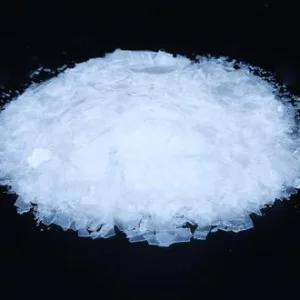
Ultra-pure process gases, functionalized polymers, and specialty nitrate compounds engineered to industrial-grade standards.








The manufacturing sector's rapid pivot to agile tooling demands high-modulus, chemically inert liquid elastomers capable of micron-level fidelity.
Modern foundries pair stereolithography (SLA) 3D master patterns with liquid reactive polyurethane and polybutadiene rubbers. This reduces production lead times from weeks to hours while sustaining thermal resistance against exothermic casting resins.
Global supply chains require consistent bulk synthetic polymers. Sourcing directly from verified Chinese synthesis plants stabilizes procurement expenses, shielding manufacturers against regional raw polymer index spikes.
Standard room-temperature vulcanizing (RTV) silicones are augmented by hydroxyl-terminated (HTPB/HTBS) and amino-terminated (ATBN) functional matrices that deliver higher tear strength, abrasion resilience, and dimensional stability.
Commercial reference metrics and mechanical properties for bulk procurement planning. Spot FOB/CIF pricing fluctuates based on base monomer costs and freight indices.
| Polymer System / Grade | Hardness (Shore) | Viscosity (mPa·s @ 25°C) | Tensile Strength | Wholesale Reference (Metric Ton) | Standard Packaging |
|---|---|---|---|---|---|
| HTPB (Hydroxyl-Terminated Polybutadiene) | A45 – A70 | 4,000 – 8,000 | ≥ 2.5 MPa | $4,800 – $6,200 | 180 kg Drum / ISO Tank |
| EPB (Epoxidized Polybutadiene) | A60 – D40 | 6,500 – 12,000 | ≥ 4.2 MPa | $5,400 – $7,100 | 200 kg Steel Drum |
| ATBN (Amino-Terminated Butadiene Acrylonitrile) | A50 – A85 | 15,000 – 35,000 | ≥ 6.0 MPa | $6,900 – $8,800 | 25 kg Pail / 200 kg Drum |
| HTBS (Hydroxyl-Terminated Butadiene Styrene) | A55 – A80 | 5,000 – 9,500 | ≥ 3.8 MPa | $4,600 – $5,900 | 190 kg Drum |
| LSBR (Liquid Styrene Butadiene Rubber) | A40 – A65 | 3,000 – 7,000 | ≥ 2.8 MPa | $3,900 – $5,200 | IBC Container / Drum |
Targeted chemical architectures engineered for high-duty mold-making and industrial casting operations.
Polyurethane and modified liquid rubber matrices deliver abrasion protection against aggregate slurries. They resist alkaline degradation, ensuring exact release lines over hundreds of pours without surface pit formation.
Low-viscosity prepolymers fill fine cavities under vacuum conditions. The resulting molds reproduce complex textures, undercut clips, and precision snap-fit components using polyurethane replica resins.
High-elongation liquid rubbers support repetitive shock loading and hydro-mechanical pressures in slip-casting, technical ceramics extraction, and continuous extrusion runs.
Systematic qualification, dangerous-goods shipping certifications, and analytical verification protecting your import supply chain.
Every lot is analyzed by FTIR, GPC (Gel Permeation Chromatography), and Karl Fischer titration to verify functional group values and moisture content below 0.05%.
Complete compliance with IMDG/IATA mandates. We manage UN-rated containers, temperature monitoring, and export documentation for regulated reactive prepolymers.
Formulations align with modern environmental benchmarks, eliminating regulated phthalates, organotins, and short-chain chlorinated paraffins.
Our polymer chemists guide process integration: metering ratios, vacuum degassing parameters, and post-cure thermal schedules for optimal matrix cross-linking.
Next-generation polymer research focused on thermal boundaries, sustainable chemistries, and self-healing matrices.
Replacing petrochemical polyols with functionalized plant-derived triglycerides, targeting a 30% reduction in carbon footprint without compromising tensile performance.
Developing silicon-modified liquid polybutadiene variants capable of enduring molten low-melt metal alloy casting cycles without depolymerization.
Incorporating reversible Diels-Alder adducts within the polymer network to close micro-fissures generated during repeated mechanical demolding.
Adding piezoresistive carbon nanomaterials into liquid tooling polymers to enable real-time tracking of tool stress and mold degradation.
Key technical and procurement insights for commercial tooling teams, mold engineers, and raw material purchasers.
Hydroxyl- and amino-terminated liquid rubbers (HTPB, ATBN) deliver higher dynamic tear strength, superior abrasion resistance, and greater adhesion compatibility with modified epoxies and polyurethanes. Silicones excel in self-release performance, whereas liquid synthetic diene rubbers provide superior mechanical stability under heavy abrasive casting loads.
Trace moisture reacts with polyisocyanate curing agents to produce carbon dioxide gas, causing internal voids, pinholes, and loss of tensile modulus. Our materials are processed under vacuum distillation and packaged under a dry nitrogen blanket to guarantee moisture levels below 0.05%.
For two-component reactive formulations, blend under low-shear mechanical agitation to prevent air inclusion. Degas in a vacuum chamber at 28–29 in. Hg (approx. 5–10 mbar) for 5–8 minutes. Allow the mixture to expand and collapse fully prior to pouring down the side of your mold box.
Wholesale quotations reflect order volume, polymer viscosity tolerances, functional group titration specs, and packaging (e.g., standard steel drums vs. heated ISO tank containers). Annual supply agreements feature price-smoothing mechanisms indexed to global feedstock benchmarks.
Specialty alloy powders, functional polymer prepolymers, and high-purity inorganic salts for industrial casting and synthesis.