Basic Cupric Nitrate
Wholesale Basic Cupric Nitrate Manufacturers, Supplier


Verified batches ready for OEM industrial deployment. Explore our core technical materials engineered to rigid batch specs.



In-depth structural breakdown of sub-micron tricalcium phosphate systems engineered for maximum reactivity, uniform dispersion, and targeted thermal release profiles.
Tri-Calcium Phosphate (Ca₃(PO₄)₂) exists primarily in low-temperature rhombohedral β-TCP and high-temperature monoclinic α-TCP phases. Our factory utilizes wet-chemical precipitation followed by closed-loop thermal calcination (above 1125°C for α-phase, or precisely annealed at 800°C for high-density β-phase). This ensures predictable bio-resorption rates in medical scaffolds and uncompromised dielectric stability in electro-ceramics.
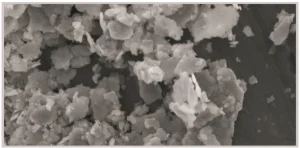
Standard industrial TCP often exhibits agglomeration resulting in erratic flow and coarse settling. By deploying multi-stage air classification and fluidized-bed jet milling, our Ultrafine TCP reaches a strictly gaussian particle size distribution where D90 < 4.0 µm and D50 ranges between 0.8–1.8 µm. This micro-scale profile minimizes abrasive wear on production tooling while offering ultra-high specific surface area (SSA > 12 m²/g).
Deviations in the stoichiometric Ca/P molar ratio can fundamentally destabilize high-temperature ceramics or trigger phase shifts during sintering. Our automated titration reactors hold the Ca/P ratio securely at 1.50 ± 0.02, preventing unexpected crystallization into hydroxyapatite or calcium pyrophosphate during downstream thermal treatment or compound processing.
| Analytical Parameter | Pharma / Bio-Grade Ultrafine TCP | Food / Fortification Grade | Technical / Ceramic Grade | Methodology Standard |
|---|---|---|---|---|
| Assay (as Ca₃(PO₄)₂) | ≥ 98.8% | ≥ 97.5% | ≥ 96.0% | Titrimetric / XRF |
| Particle Size (D50) | 0.8 – 1.4 µm | 1.8 – 3.5 µm | 2.0 – 5.0 µm | Laser Diffraction (ISO 13320) |
| Heavy Metals (as Pb) | ≤ 1.0 ppm | ≤ 2.0 ppm | ≤ 10.0 ppm | ICP-MS |
| Specific Surface Area (BET) | 14.5 – 18.2 m²/g | 8.0 – 12.0 m²/g | 5.5 – 9.0 m²/g | N₂ Adsorption (BET) |
| Loss on Ignition (800°C) | ≤ 2.5% | ≤ 5.0% | ≤ 3.0% | Gravimetric Furnace |
How global enterprises integrate our ultrafine inorganic phosphate solutions into mission-critical production workflows.
Serves as a high-efficiency nucleating agent and flame-retardant synergest in high-temperature polymers (PET, PBT, PA66). The micro-scale particle architecture increases thermal distortion thresholds without compromising tensile elasticity or optical transparency in thin films.
Crucial precursor for synthesizing bio-inert implants, bone substitutes, and electro-dielectric substrates. Low volatile content, zero carbon contamination, and sub-micron sintering reactivity yield dense ceramic matrixes with minimal microporosity.
Acting as an ultra-high performance anti-caking agent and direct compression carrier for tablets and powdered formulas. High moisture-absorption capacity prevents hygroscopic clumping in humid environments without altering active pharmaceutical ingredient (API) stability.
Integrated into anti-corrosive primer systems and inorganic ceramic coatings. Ultrafine TCP particles neutralize acid permeation through micro-fissures in paint film matrixes, providing long-term galvanic passivity to structural steel substrates.
Leveraging upstream phosphate ore clustering, automated SCADA controls, and multi-tier energy reclamation for stable, high-throughput delivery.
Our direct operational proximity to prime mineral phosphate veins in China eliminates multi-tiered transit overheads, stabilizing feed raw materials against commodity price shocks and geopolitical turbulence.
Human error is eliminated via fully automated closed-loop digital titration. In-line laser analyzers measure crystal nucleation in real time, triggering instant adjustments to pH, agitation rpm, and reaction temperature.
With an annual output topping 45,000 metric tons, automated bagging lines, and computerized high-bay storage, we ensure continuous buffer inventory for multinational tier-1 industrial clients with 99.4% on-time delivery.
A procedural framework for technical purchasers, material scientists, and QA auditing specialists assessing Chinese chemical manufacturing capabilities.
Heavy metal contamination (Arsenic, Lead, Cadmium, Mercury) poses devastating recall risks in regulated sectors. Ensure your manufacturing partner supplies third-party verified ICP-MS elemental reports rather than generic wet-chemistry batch declarations. Our lots provide traceability down to sub-ppm boundaries.
For high-speed automated filling lines, bulk density uniformity (tapped vs. aerated) determines volumetric metering precision. We test Hausner ratios and Carr’s Index on every packaging run to ensure seamless integration into hopper feeds, eliminating costly downtime caused by bridge formation.
Sub-micron TCP is intrinsically hygroscopic. To maintain zero agglomeration during lengthy ocean freight journeys, our export shipments utilize multi-wall kraft paper bags with inner heat-sealed polyethylene liners, wrapped in thermo-shrink pallet films with integrated desiccant packs.
Comprehensive regulatory dossiers engineered to speed border clearance, satisfy port authorities, and simplify internal compliance checks.
Full registration compliance under EU REACH regulations, with updated IUCLID dossiers, safety scenarios, and GHS-compliant multilingual SDS for European customs import clearance.
Dedicated production tracks adhere strictly to current United States Pharmacopeia (USP), European Pharmacopoeia (EP), and Food Chemicals Codex (FCC) monographic limits.
Annual inspection and certification by globally recognized Islamic food bodies and Rabbinical councils, confirming zero animal derivative cross-contamination during synthesis.
Auditable quality and hazard management systems overseeing raw material intake, continuous precipitation reactors, drying towers, milling circuits, and automated robotic palletizing.
Strategic R&D investments transforming particle surface energy, eco-efficient manufacturing, and nanoscale synthesis.
To overcome surface tension barriers in non-polar organic resins and rubber polymers, we are expanding our surface-functionalized TCP lineup. In-situ silane coupling agents coat individual calcium phosphate crystals, ensuring rapid dispersion into masterbatches without increasing melt viscosity.
For high-performance biomedical bone cements and 3D bioprinting matrices, our pilot reactor line is scaling supercritical hydrothermal synthesis of monoclinic alpha-TCP with crystallite domains below 200 nm, enabling accelerated osteoinductive bonding.
Aligning with global ESG directives, our factory infrastructure is transitioning toward electric induction calcining and automated heat capture systems, cutting Scope 1 & 2 emissions by 34% per metric ton produced.
Direct technical answers addressing particle morphology, logistics certifications, testing procedures, and MOQ parameters.
Browse our integrated manufacturing output across metal powders, reactive liquid rubbers, and high-purity salts.